
Stack-agnostic methodology for product, content, and brand work
Open-source Claude Skills and the AI engines that run them.
8 audience tracks across 6 curated suites, 13 multi-skill walkthroughs, MIT licensed. Run it with Claude or read it directly.
Browse the catalog
Skills by category and audience.
Start here
A free starter kit, one instruction.
Follow a use case
Multi-skill orchestration recipes.
Match a problem you have
Audience-problem framings to skill clusters.
- Skills
- 103 skills
- Walkthroughs
- 13 walkthroughs
- Suites
- 6 suites
- Integrations
- 35 integrations
- License
- MIT licensed
Showcase
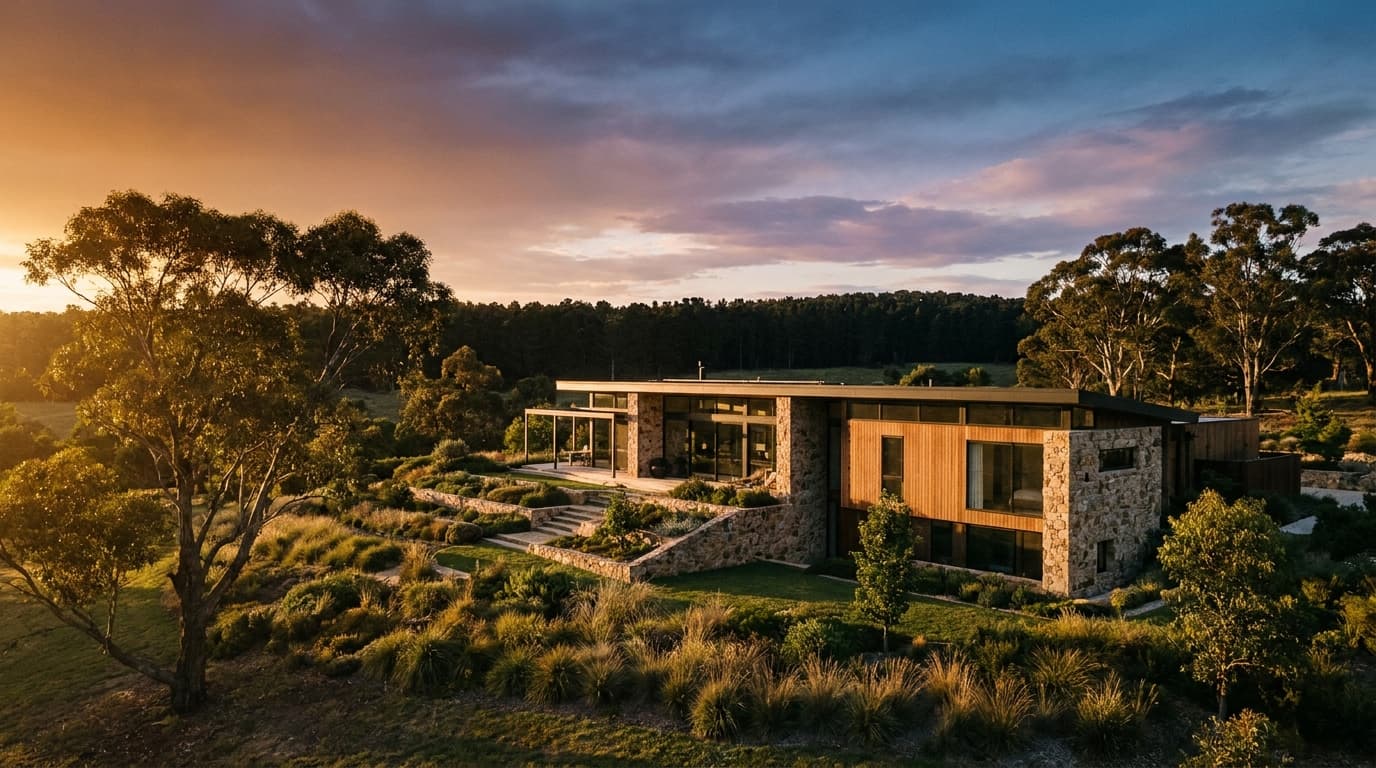
The framework rendered as 42 brand sites.
Each archetype is a complete fictitious brand microsite with its own typography, palette, motion, and voice. Same framework, different visual languages.



Framework
Four axes. Fifteen positions.
Pick a position on each axis. The resulting brief is what downstream skills consult when they produce content, design, copy, voice, and identity.
Tone
How warm is the language?
Aesthetic
How visually dense?
Relationship
Where does the brand stand vs. the reader?
Sensory
What is the emotional ask?
Catalog
The skills that get used first.
103 skills cover the full website lifecycle. These 6 are the ones most teams reach for to start, one per suite. Click a card to expand.
Brand and creative
Creative direction
Walk through four directional axes and produce a structured aesthetic brief downstream skills consume.
The foundational brand skill. Tone, aesthetic, relationship, sensory. The brief produced here drives everything downstream: voice, identity, copy, design.
PM, gap-closing
Feature launch playbook
The discipline of launching a feature well: positioning, alignment, comms, enablement, rollout, monitoring.
What separates a feature that ships from a feature that lands. Internal alignment, customer comms, sales enablement, support readiness, rollout strategy, post-launch measurement.
Content
Pillar content architecture
Hub-and-cluster topical authority: pillar selection, cluster planning, internal linking, refresh discipline.
The structural foundation of content marketing that compounds. Distinguishes hub-and-spoke that earns topical authority from random blog posts under one site nav.
Growth tooling
Funnel flow architecture
Cross-tool conversion flows architected to match the audience and the funnel stage.
The architecture skill that orchestrates calculators, quizzes, forms, magnets, chatbots into matched-funnel flows. Distinguishes silo-funnels from kitchen-sink-funnels from matched-funnels.
Workflows
Skills compose into suites for whole audiences.
Some teams want one skill. Some want a working discipline. The catalog is filed under 8 audience tracks, and those tracks are drawn on by 6 curated suites, each a coherent workflow for a specific audience. Click any flagship to read its landing.
Brand teams and agencies
Brand Suite
5 flagshipsSet creative direction, build the identity system, write the voice, ship the brand pages. The foundation of the catalog.
Performance marketers and agencies
Marketing Suite
3 flagshipsStrategy, creative production, and result interpretation for paid media. Pairs with Google Ads, Meta, LinkedIn, TikTok, and Synter integrations.
Product managers and analysts
PM Experimentation Suite
5 flagshipsDesign, run, and analyze experiments end-to-end. Five tool-agnostic skills that compose into a working experimentation discipline.
PMs, growth analysts, data leads
PM Gap-Closing Suite
3 flagshipsInstrument product analytics correctly, run warehouse-native experiments, launch features that actually land. The execution discipline that turns shipped features into measured outcomes.
Content strategists, editors, content ops
Content Suite
5 flagshipsThe full content workflow vocabulary. Strategy, hub architecture, briefs, programmatic SEO, editorial QA, and human-AI collaboration as a workflow layer that composes across all of them.
- pillar-content-architecture
- content-brief-authoring
- programmatic-seo
- editorial-qa
- ai-content-collaboration
Growth marketers, lifecycle PMs, marketing ops
Growth Tooling Suite
5 flagshipsInteractive web tools that turn visitors into leads and activate signups. Lead magnets, calculators, quizzes, multi-step forms, chatbots, plus the cross-tool funnel architecture that orchestrates them. A new audience track for marketing teams running growth-tooling work.
Walkthroughs
When one skill is not enough, follow a packaged sequence.
Walkthroughs orchestrate skill clusters end-to-end for specific use cases. Each one names the audience, lists the skills involved, and walks through the orchestration shape so you can run it on your own work.
PM, Growth, Engineering
Run an AB test
Hypothesis to ship-decision: design, instrument, run, and interpret an experiment without the failure modes that produce wrong calls.
Read the walkthroughContent, Growth, PM
Build a content hub
Pillar piece plus 8 to 15 cluster pieces, briefed and shipped with editorial QA, on a 3 to 5 year topical-authority horizon.
Read the walkthroughPM, Growth, Marketing
Audit and improve a SaaS website
Diagnose underperformance across SEO, design, performance, and conversion, then ship the highest-impact fixes in priority order.
Read the walkthrough
The engines
AI-assisted product management
Three engines on the catalog. Krine decides what to build, Tholo builds it, Basano proves it.
The skills are yours to use. The engines are the orchestrated layer that runs them, built to enterprise product standards.
Between the two sits the starter kit: paste one instruction and your own Claude builds your workflow library out of this method, no engines required.
Research
Measurement infrastructure for AI search.
RampStack maintains public measurement infrastructure for AI search surfaces. The SERP event registry is a dated, sourced, confidence-tagged record of AI model releases, search feature changes, and confirmed algorithm updates.
The repository is the source of truth and the page renders it. Every row carries its date, its sources, and the confidence tier the evidence supports.
Latest
What shipped most recently.
- Skill
The catalog installs in Codex
The full catalog ships as a Codex distribution: 103 skills and 490 reference files that install into a project's .agents folder and load in the Codex desktop app.
- Site
The starter kit
A free kit that turns the processes a team runs from memory into a written, validated workflow library: an agent reads one file, interviews the operator, ranks their processes, and drafts their first five workflow files.
- Research
The SERP event registry reaches 32 events
Six events landed covering 16 July to 18 August 2026, including the registry's first row on the Claude surface and the August spam update as Google's Search Status Dashboard logged it, each carrying the confidence tier its sourcing supports.
Integrations
Composes with the tools your team already uses.
The framework lives inside existing team workflows. Briefs in Notion, tickets in Jira or Linear, design in Figma, code in GitHub, sprints in agile cadence. Skills run where the work is, not in a separate tool.
All 35 integrations are documented end to end across six patterns, with the same rigor as the catalog itself. Pick the workflow you already run; the methodology slots in.
Project
Brand Build Skills for Claude
The underlying project, MIT-licensed and stack-agnostic.
103 skills
Claude Skills
The parent repository. Every skill on this site ships from here, and the four subsets below are cut from it.
14 skills
Claude Skills Starter
General-purpose lite subset. 14 skills covering dev, design, content, product, and meta work.
12 skills
Claude Skills SEO
SEO-focused subset. 12 skills for keyword research, technical SEO, content briefs, and audits.
12 skills
Claude Skills PM
Product management subset. 12 skills covering discovery, planning, execution, launch, and measurement.
65 patterns + 32 components
Claude Skills Widgets
65 widget patterns and 32 production-ready React components for landing pages and conversion surfaces.
All family catalogs conform to the Agent Skills open standard, working across Claude Code, Codex CLI, Gemini CLI, and 25+ other platforms.
Common questions
Frequently asked.
What is a Claude Skill?
A Claude Skill is an open-source instruction module Claude loads on demand to do a specific job (write a brand voice, draft landing-page copy, audit creative direction). RampStack publishes a comprehensive open-source catalog under MIT license, organized into 8 audience tracks: brand, content, design, SEO, product management, growth tooling, paid media, and operations.
What is the creative direction framework?
Four axes for the brief that downstream brand work answers to: tone, aesthetic, relationship, and sensory. Tone, aesthetic, and relationship each have four positions; sensory has three. That gives 192 possible combinations. The framework lets a one-line brand idea become a launched site without quality drift between specialists.
Is RampStack free to use?
The catalog, framework, and showcase are MIT-licensed and free to use, fork, and modify. RampStack also builds done-for-you AI engines and custom consumer platforms for teams who want delivery without using the catalog directly. The free tier is the same methodology as the paid tier.
Solutions
Want this delivered as a platform?
If your team has the budget but not the bandwidth to use the open-source catalog directly, RampStack builds AI engines and consumer platforms on the same methodology. Same framework, done-for-you.
Explore solutions