Showcase
11 working tools, 11 of 12 growth-tooling skills.
The discipline of building interactive tools that earn their keep without overpromising or under-delivering.
Each tool below is a real working demonstration. The calculator computes real numbers from real inputs. The quiz scores real responses. The wizard tailors a recommendation to your inputs. The chatbot classifies real text against intents. The tour walks a real dashboard. The scheduler picks a slot from a simulated calendar. The configurator computes a live total as you build. None of it stores or transmits data; the point is the design pattern, not the data pipeline. All 11 of 11 tool types and all 3 funnel stages are populated.
Tool type
Funnel stage
Vertical
Build complexity
11 of 11 tools shown
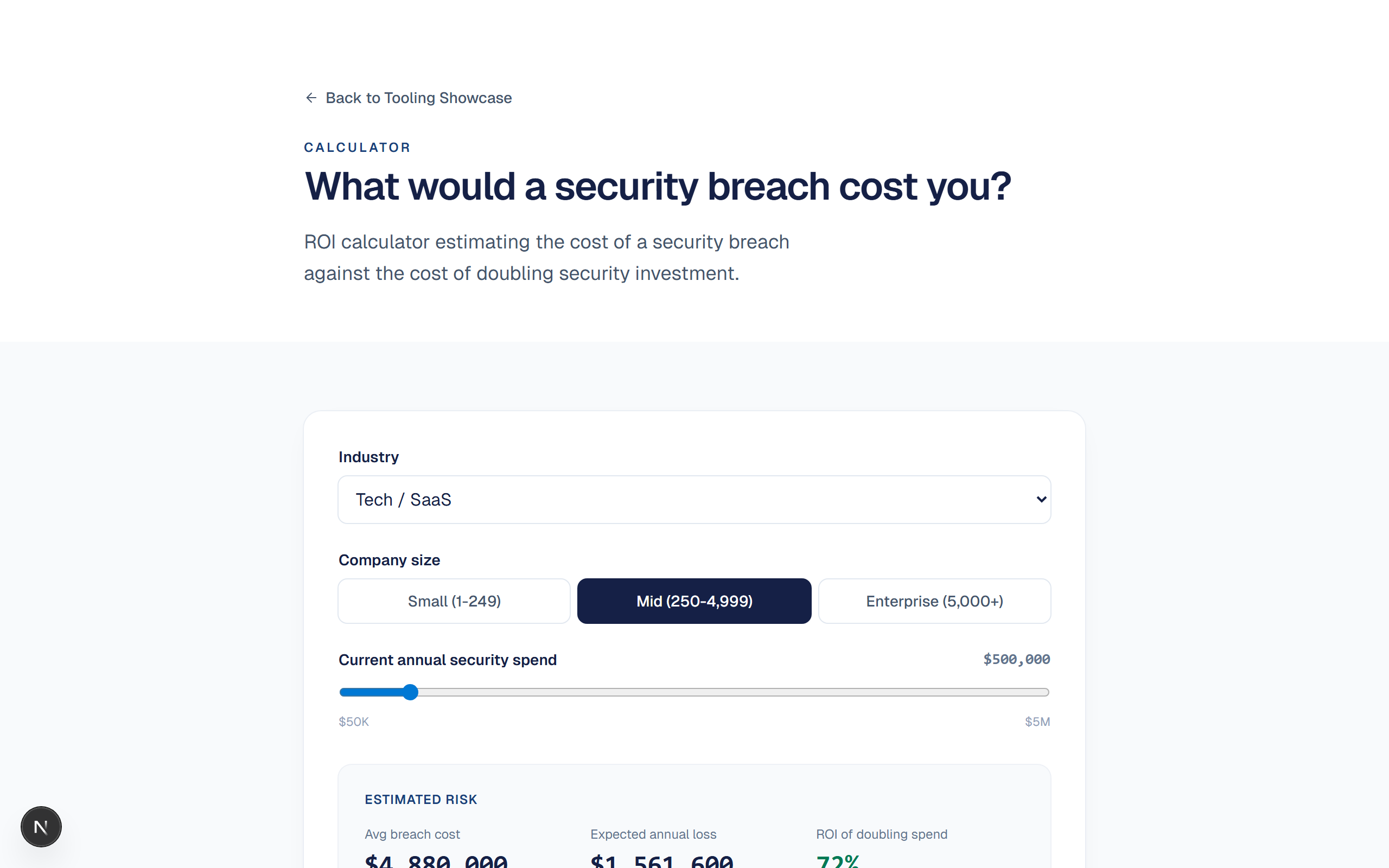
Calculator
Vault
ROI calculator estimating the cost of a security breach against the cost of doubling security investment.
CaptureTech / SaaSIntermediatePairs with calculator-design
Run the tool
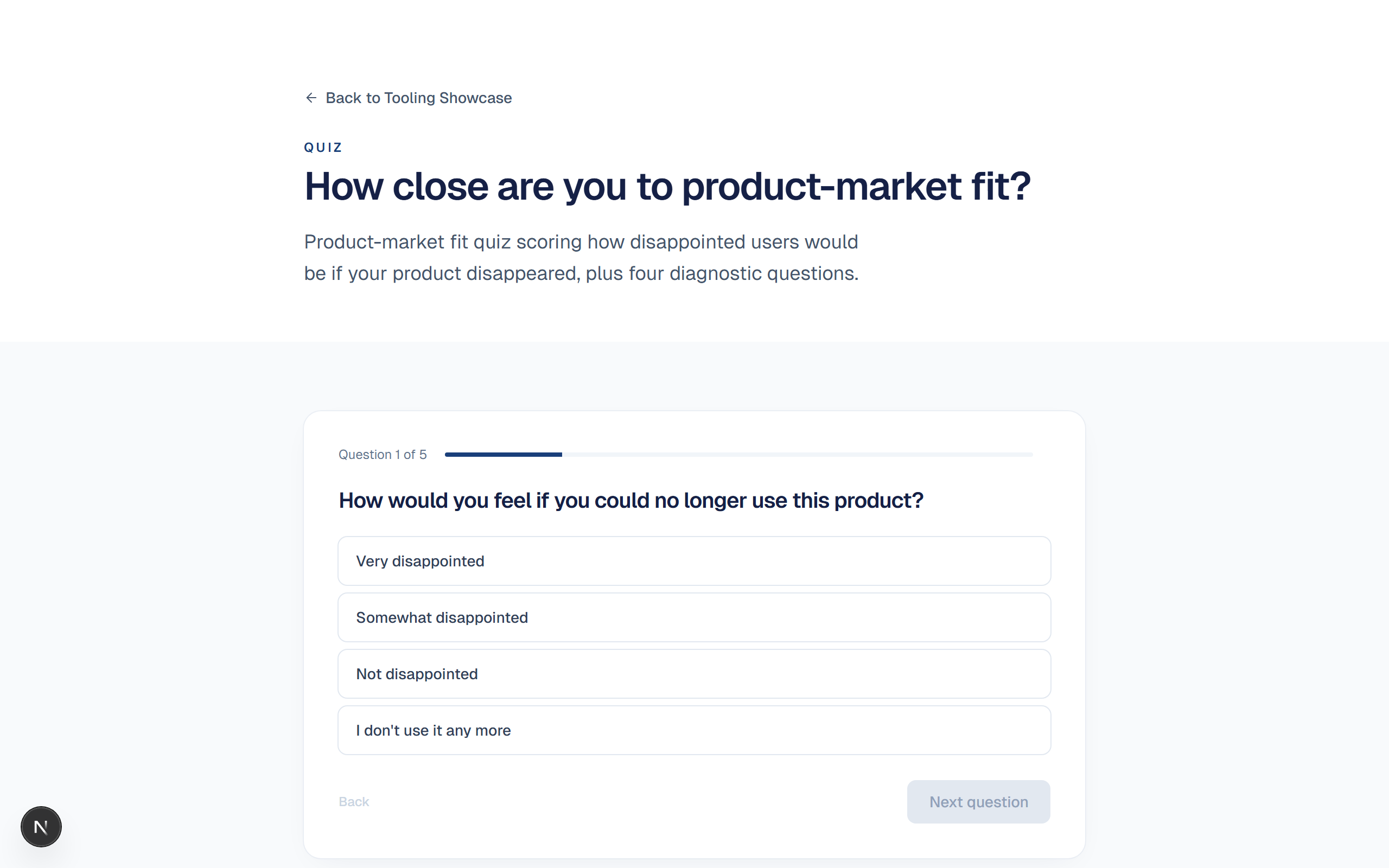
Quiz
Compass
Product-market fit quiz scoring how disappointed users would be if your product disappeared, plus four diagnostic questions.
CaptureTech / SaaSIntermediatePairs with quiz-and-assessment-design
Run the tool
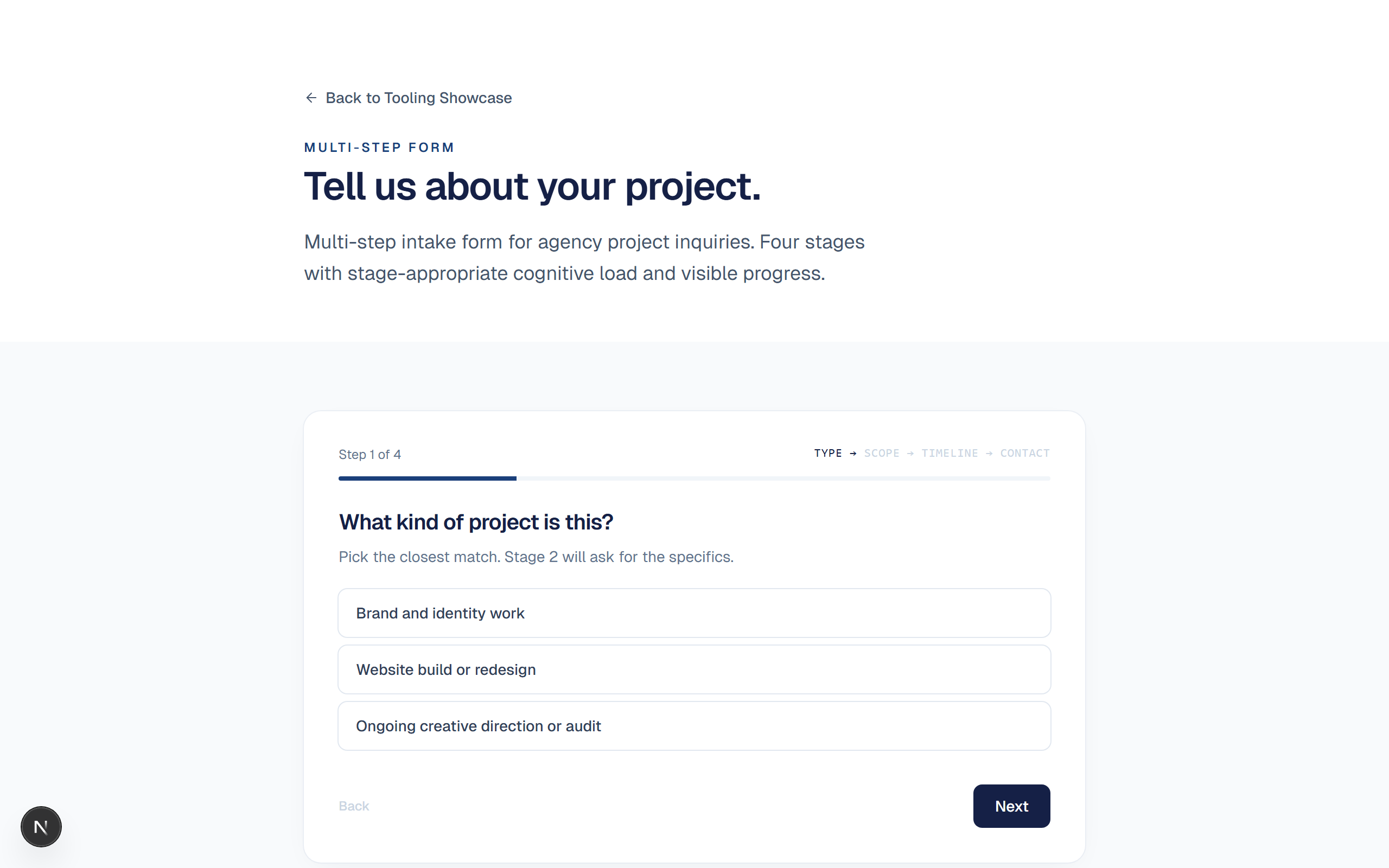
Multi-step form
Horizon
Multi-step intake form for agency project inquiries. Four stages with stage-appropriate cognitive load and visible progress.
ActivateHospitalityIntermediatePairs with multi-step-form-design
Run the tool
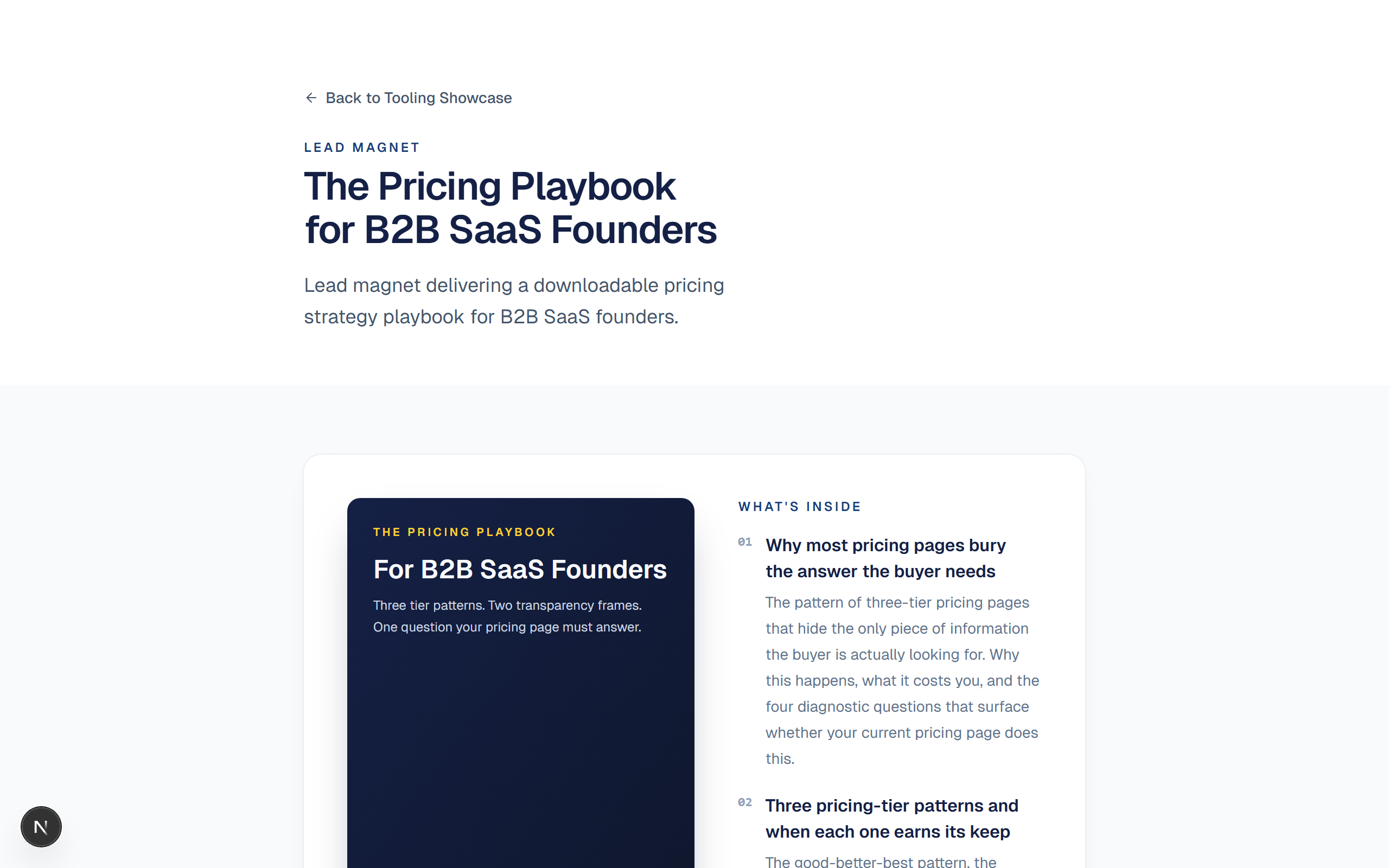
Lead magnet
Ledger
Lead magnet delivering a downloadable pricing strategy playbook for B2B SaaS founders.
CaptureFinance / FintechBasicPairs with lead-magnet-design
Run the tool
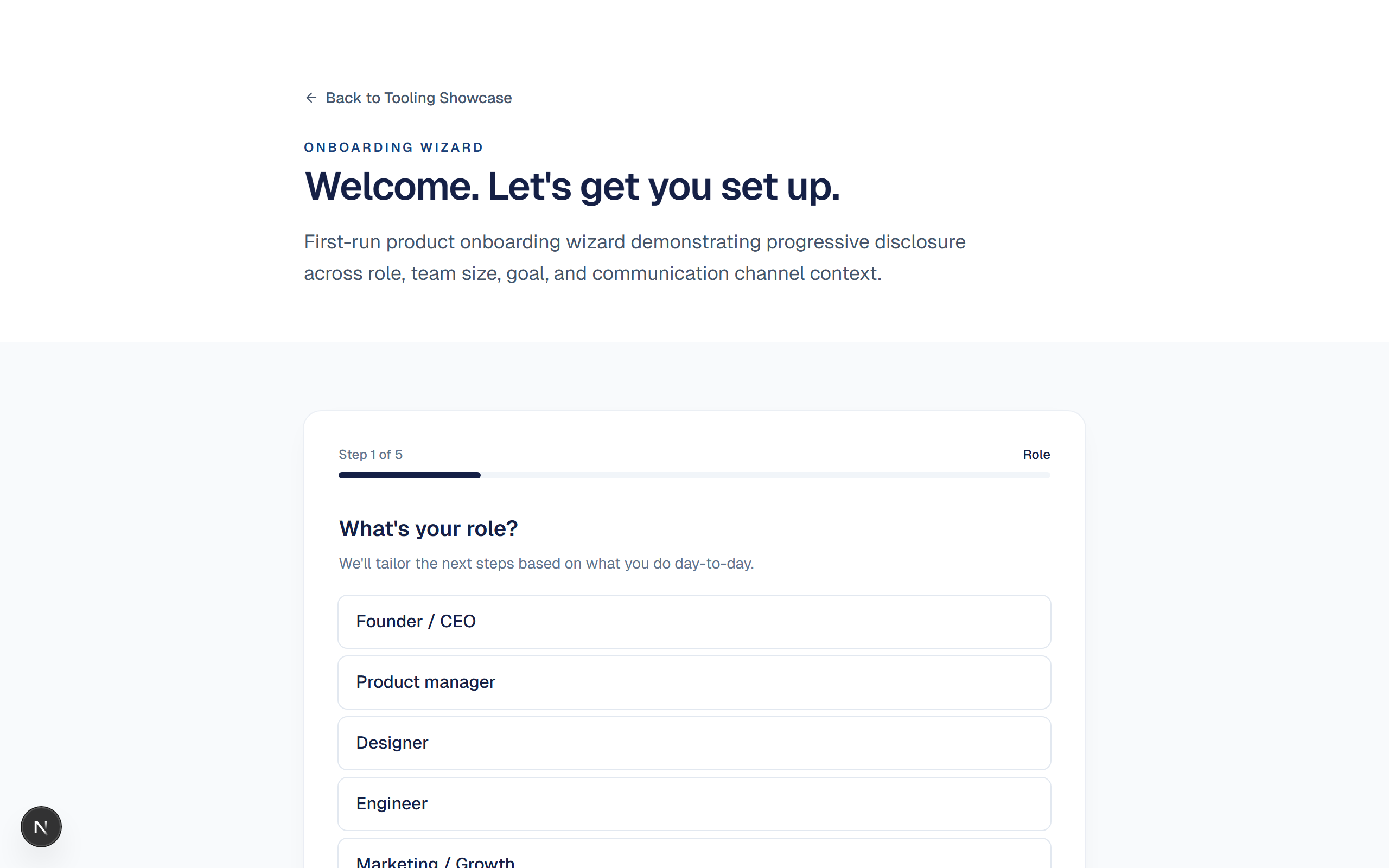
Wizard
Pulse
First-run product onboarding wizard demonstrating progressive disclosure across role, team size, goal, and communication channel context.
ActivateTech / SaaSIntermediatePairs with onboarding-wizard-design
Run the tool
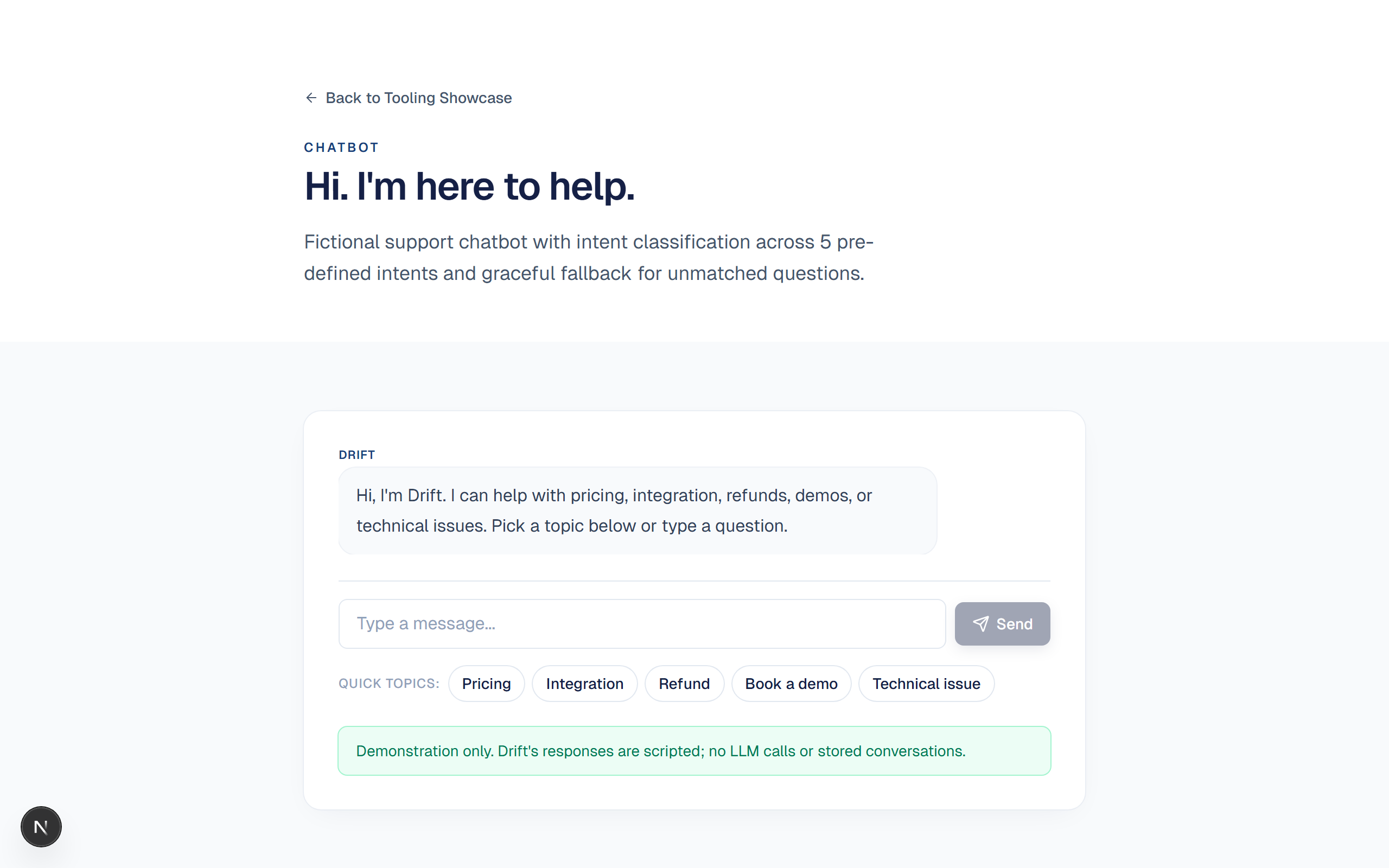
Chatbot
Drift
Fictional support chatbot with intent classification across 5 pre-defined intents and graceful fallback for unmatched questions.
ActivateTech / SaaSAdvancedPairs with chatbot-flow-design
Run the tool
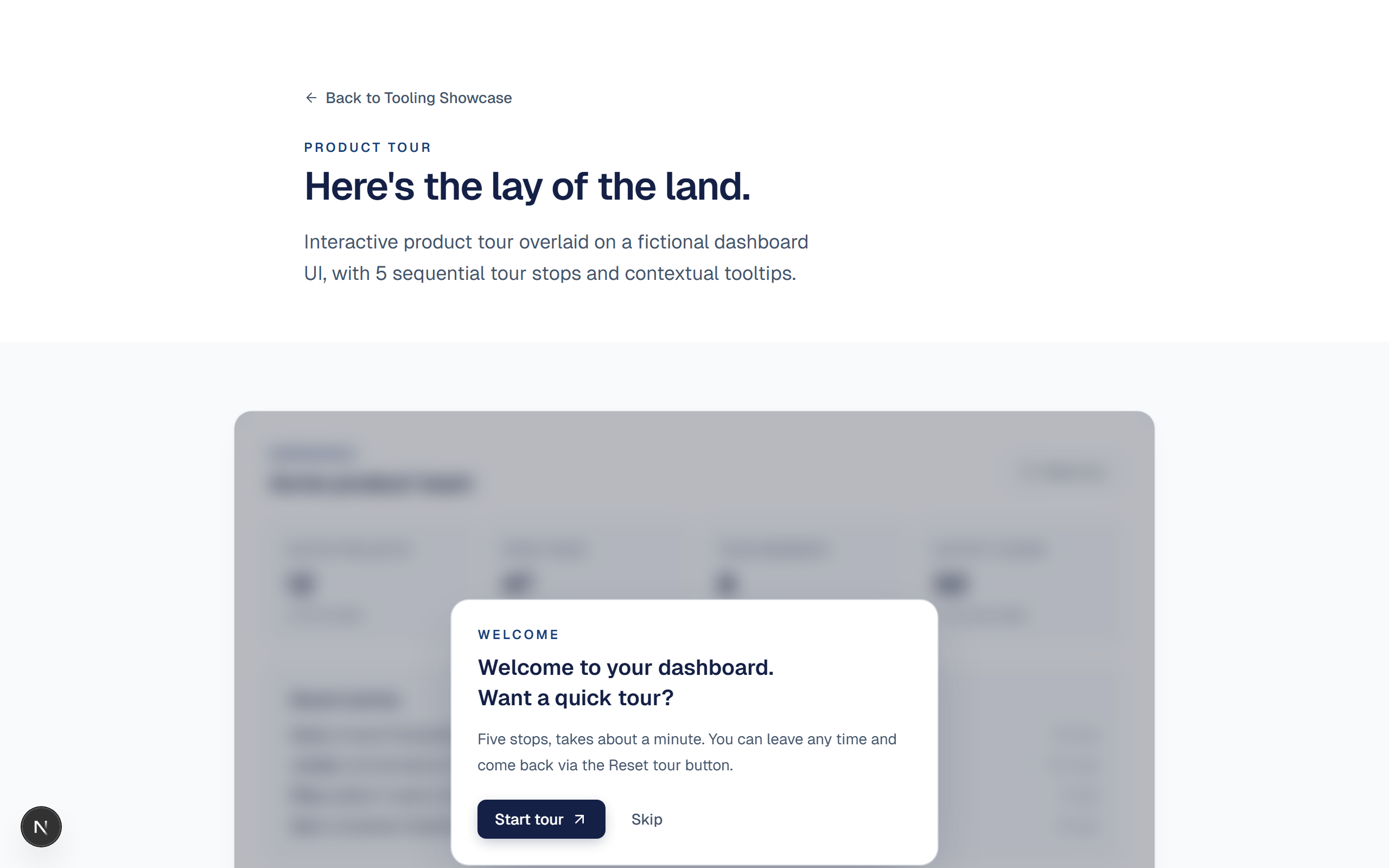
Product tour
Frame
Interactive product tour overlaid on a fictional dashboard UI, with 5 sequential tour stops and contextual tooltips.
ActivateTech / SaaSIntermediatePairs with interactive-product-tour
Run the tool
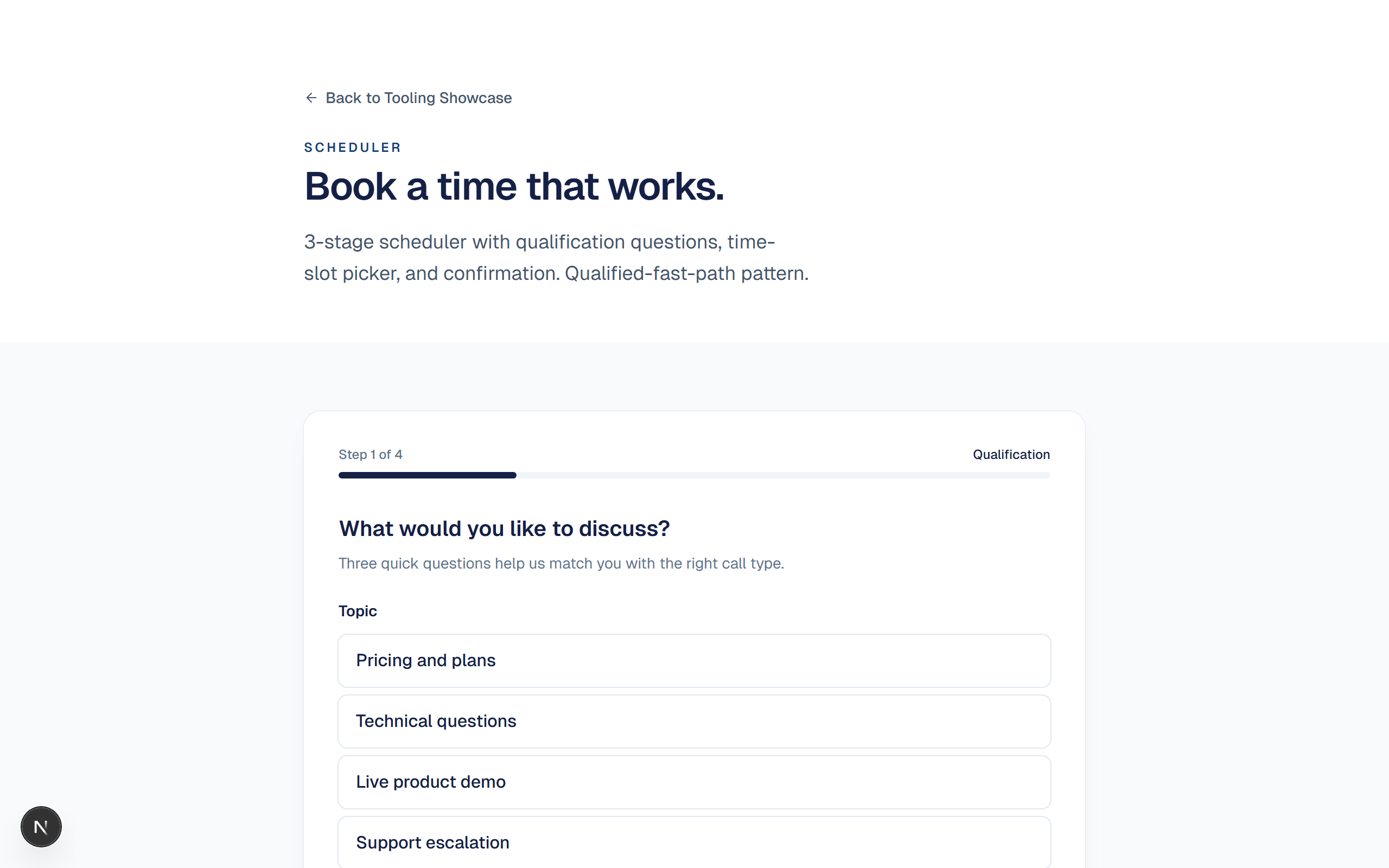
Scheduler
Slate
3-stage scheduler with qualification questions, time-slot picker, and confirmation. Qualified-fast-path pattern.
ConvertTech / SaaSIntermediatePairs with scheduler-and-booking-design
Run the tool
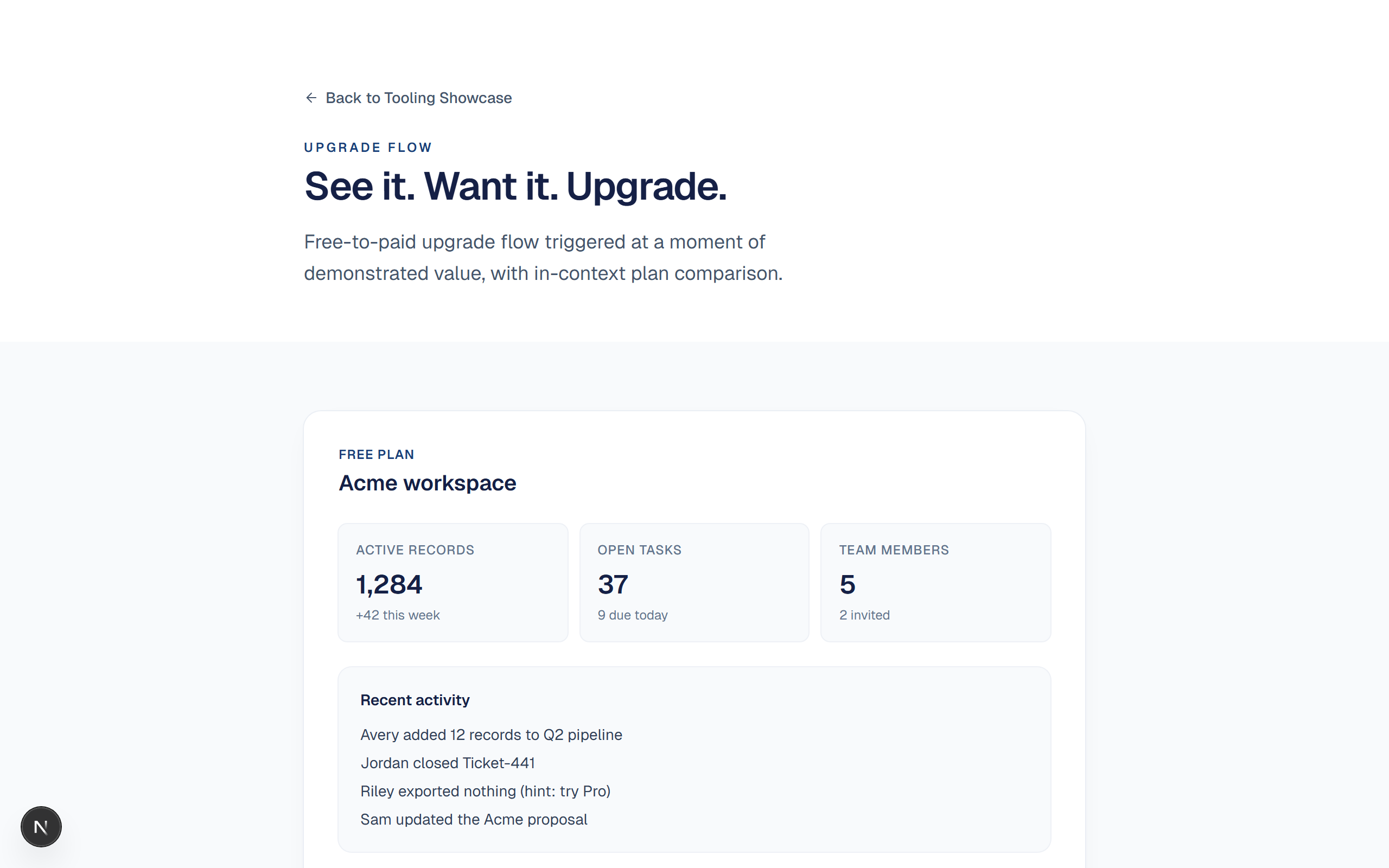
Upgrade flow
Tier
Free-to-paid upgrade flow triggered at a moment of demonstrated value, with in-context plan comparison.
ConvertTech / SaaSIntermediatePairs with upgrade-flow-design
Run the tool
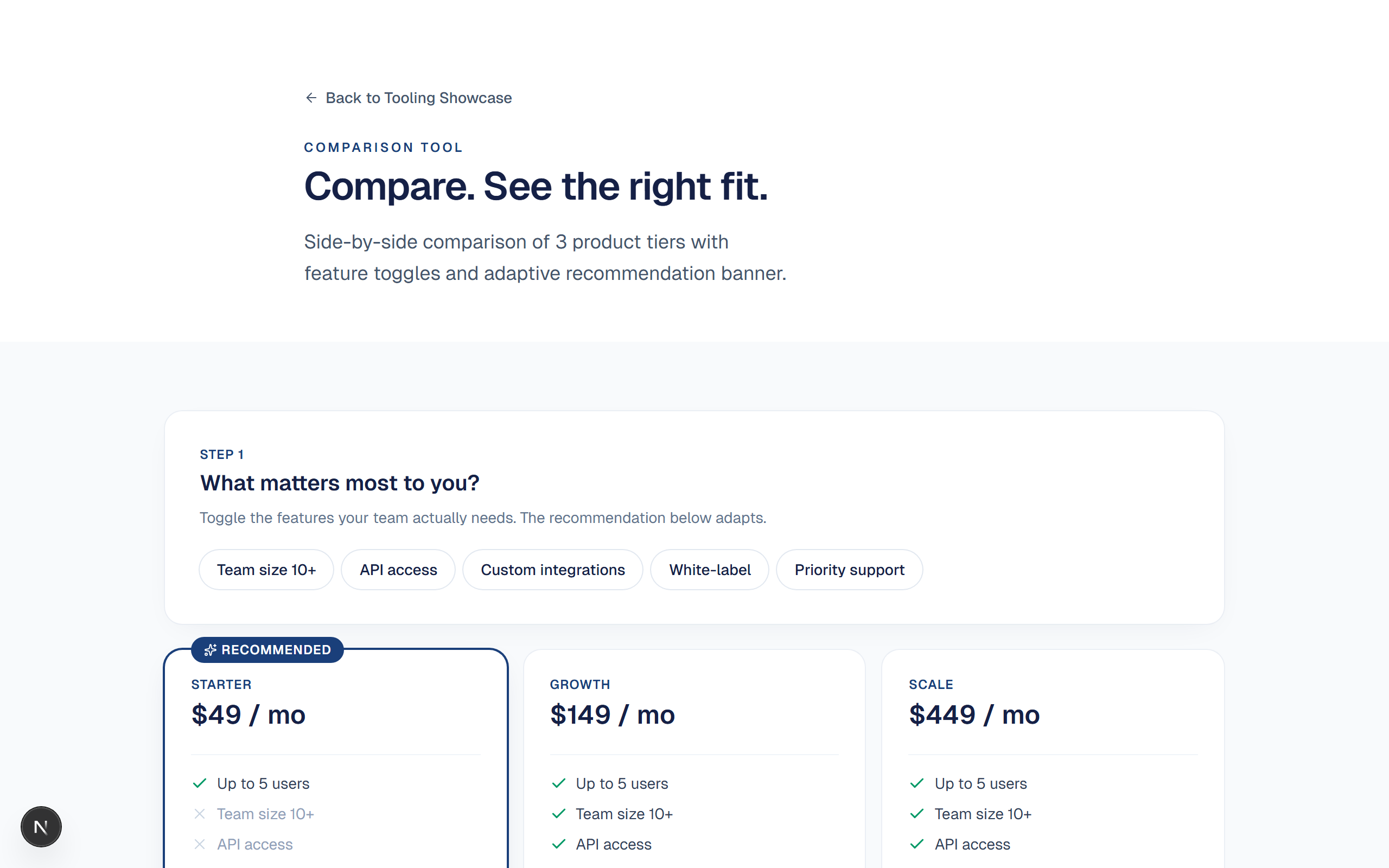
Comparison
Match
Side-by-side comparison of 3 product tiers with feature toggles and adaptive recommendation banner.
ConvertTech / SaaSIntermediatePairs with comparison-tool-design
Run the tool
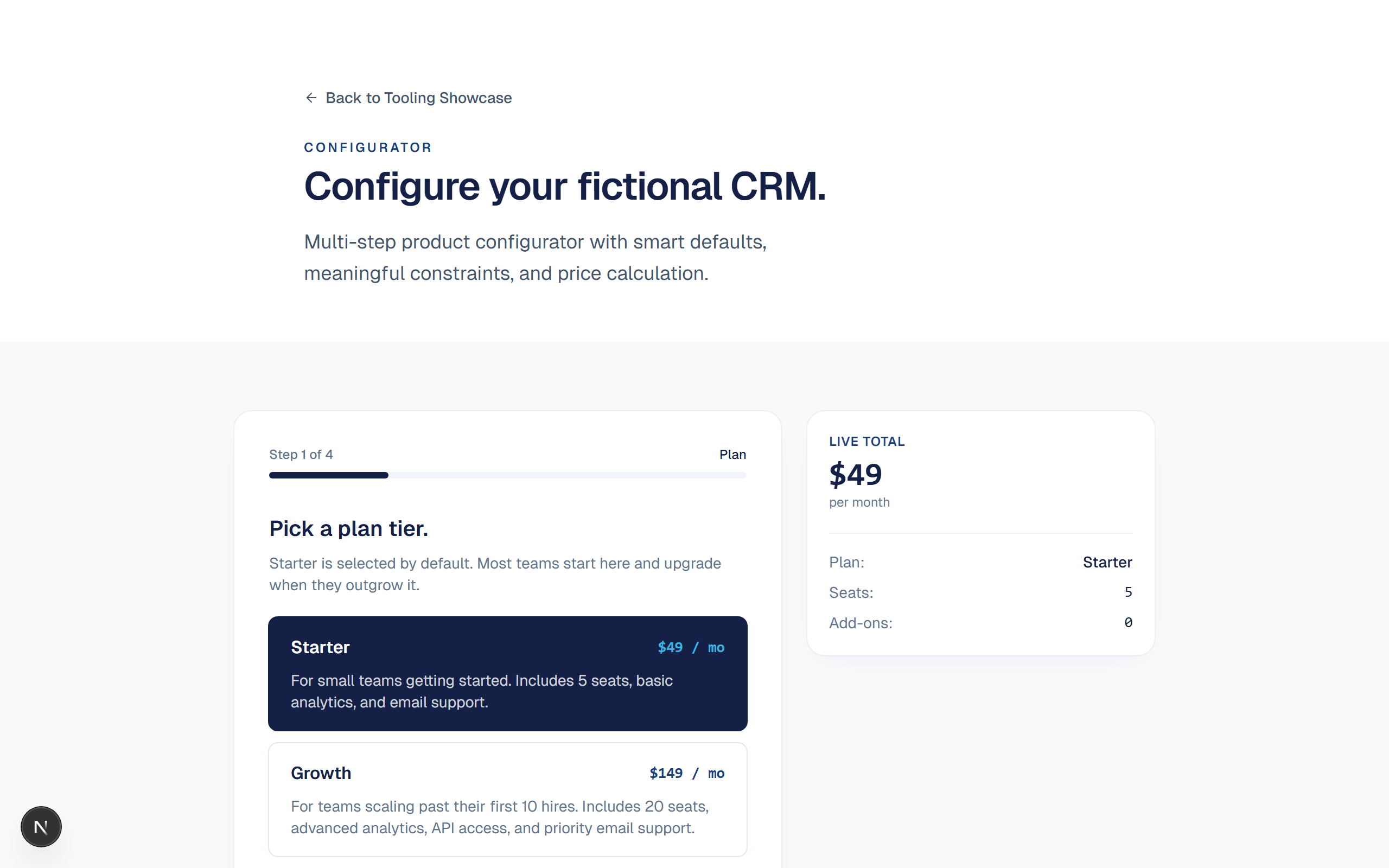
Configurator
Build
Multi-step product configurator with smart defaults, meaningful constraints, and price calculation.
ConvertTech / SaaSAdvancedPairs with product-configurator-design
Run the tool
What this showcase demonstrates
Tools earn their keep one decision at a time.
Lead-capture and conversion tools fail in predictable ways. Vanity calculators that compute a number nobody acts on. Lead-trap forms that hide useful answers behind email gates. Quizzes that produce fortune-cookie segment labels and no actual segmentation. The growth-tooling skill cluster names twelve patterns and the discipline that separates the working version of each from the version that destroys credibility.
Each tool below is a worked example of that discipline. Vault delivers the answer first and asks for email only on a deeper next step. Compass scores a real PMF index against the Sean Ellis benchmark. Pulse uses progressive disclosure across four stages so the recommendation actually depends on prior answers. Drift falls back to a re-presented intent menu rather than hallucinating an answer. Slate asks three qualification questions before showing the calendar so the call is scoped, not just booked. Match commits to an opinionated tier recommendation rather than hiding behind feature parity.
The funnel-flow-architecture skill is the orchestrator that sequences these tools into real funnels: which tool fits which funnel stage, how to chain capture into activation into conversion, and how to avoid the common failure modes (e.g., a high-friction lead magnet sitting at a low-intent funnel stage).
Frequently asked questions.
- How is the showcase organized?
- Eleven working tools across all three funnel stages: capture (calculator, quiz, multi-step form, lead magnet), activate (wizard, chatbot, product tour), and convert (scheduler, upgrade flow, comparison, configurator). Each tool type pairs with a specific growth-tooling skill in the open-source catalog. Filter chips at the top of the grid let you narrow by tool type, funnel stage, vertical, or build complexity to find the relevant pattern.
- Can I use these tools in my own product?
- These are demonstrations of design patterns, not licensed templates. The intent is to make the growth-tooling skills concrete enough to apply when building tools of your own. Read the paired skill in the catalog for the methodology, then build the version that fits your product.
- Where can I learn the methodology behind these tools?
- Each tool page links to the specific growth-tooling skill it demonstrates (calculator-design, quiz-and-assessment-design, multi-step-form-design, lead-magnet-design). The funnel-flow-architecture skill is the orchestrator that sequences these tools into real funnels; it links from this page hero.
- Do these tools collect real data?
- No. Every form, email capture, and submit handler is local-only. No data is stored or transmitted to any backend. Each tool surfaces a disclaimer in the post-submit state and the rationale section, so the demonstration discipline stays visible while you interact with the tools.