← ShowcaseVolta RoboticsB2B manufacturer / anode-ev
See how it was builtView other demos
Single Volta Robotics six-axis arm on a polished concrete factory floor

Volta Robotics · Pittsburgh, PA

The drivetrain is the design.

Premium industrial robotics. Built in Pittsburgh, deployed on three continents. Specs are the page; PDFs are the appendix.

Demo only - no sales contact is made

Request a demo

This is a demo. Submitting this form does not contact Volta sales. No data is stored.

See the products
All products
  • Volta Arm V12, full specs
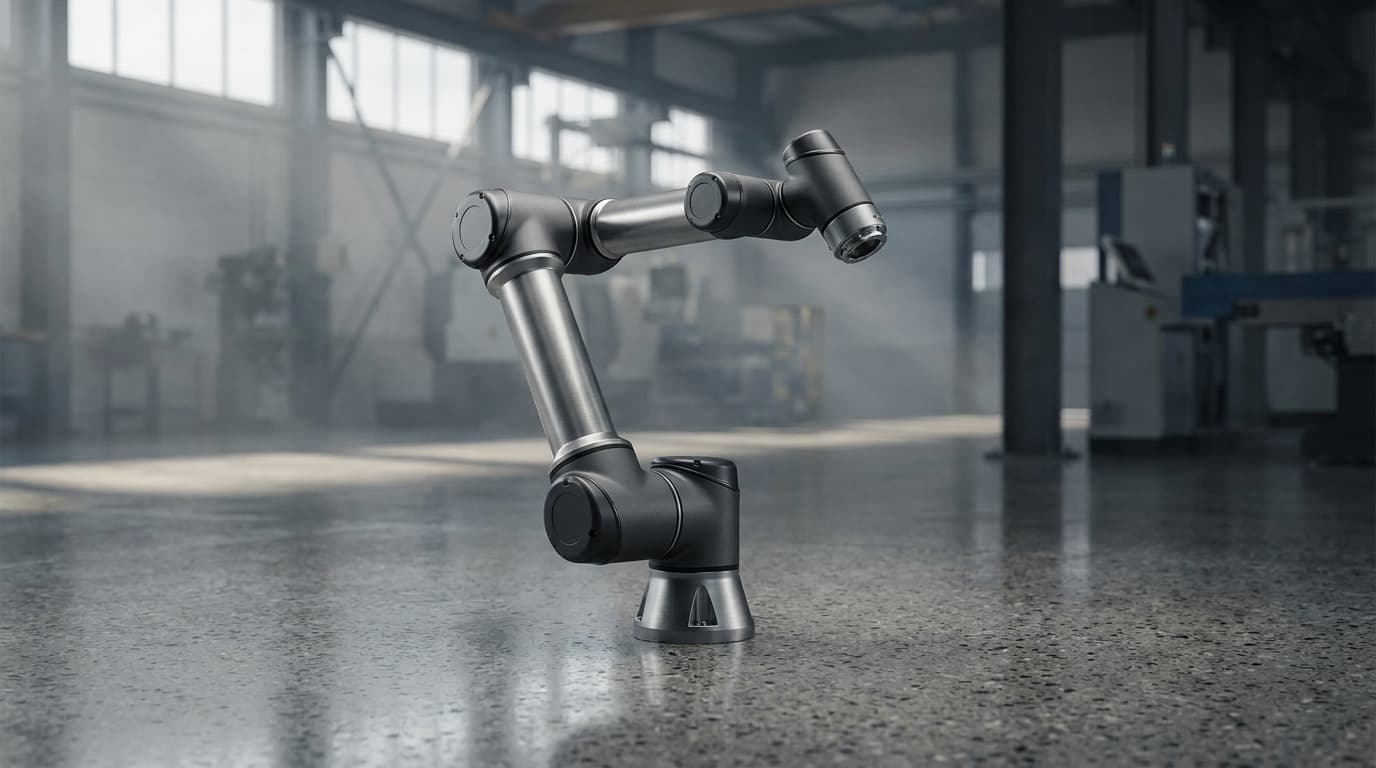
    Unbranded six-axis collaborative robotic arm posed mid-cycle on a polished concrete factory floor, atmospheric studio lighting, blurred industrial backdrop.

    Robotic arms

    Volta Arm V12

    Twelve kilograms of payload. Eighty-five milliseconds of latency.

    Payload
    12 kg
    Reach
    1300 mm
    Repeatability
    ±0.05 mm
    Latency (cmd-to-motion)
    85 ms
  • Volta Arm V30, full specs
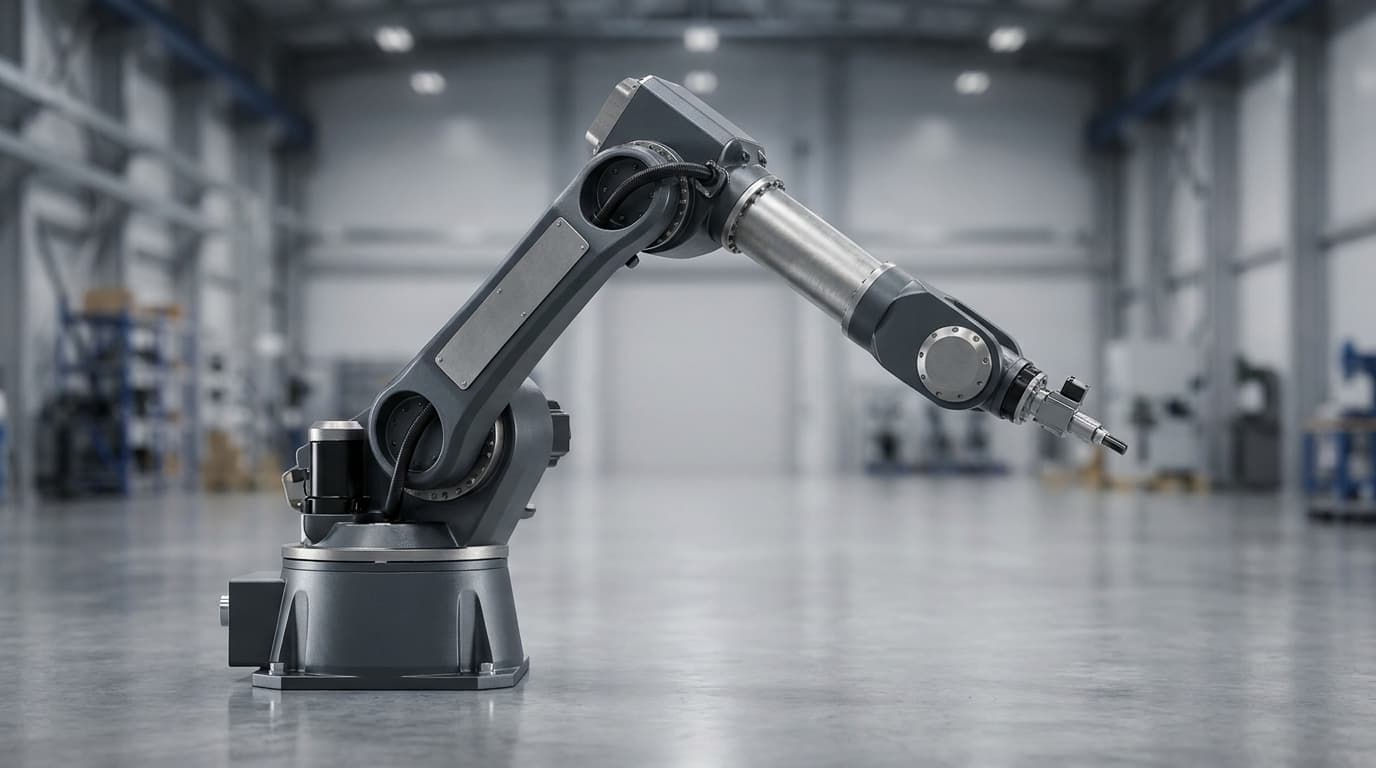
    Unbranded heavy-duty six-axis industrial robotic arm with extended reach posed on a polished factory floor, atmospheric studio lighting, blurred industrial backdrop.

    Robotic arms

    Volta Arm V30

    Thirty kilograms of payload. The arm for the line that cannot stop.

    Payload
    30 kg
    Reach
    1850 mm
    Repeatability
    ±0.08 mm
    Latency (cmd-to-motion)
    110 ms
  • Volta Rover R200, full specs
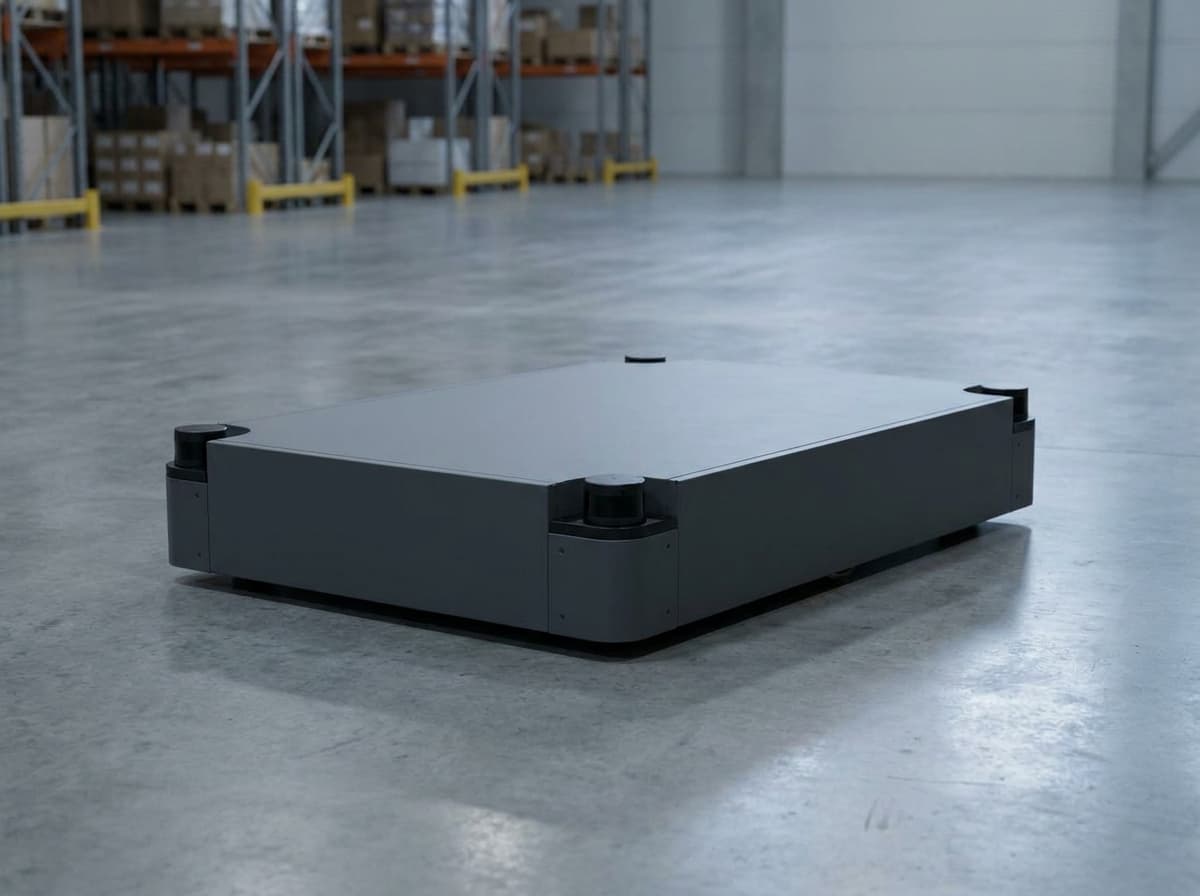
    Unbranded autonomous mobile platform on a polished warehouse floor, dark matte finish, ambient industrial lighting with shelving and racking blurred in the background.

    Mobile platforms

    Volta Rover R200

    An autonomous mobile robot the floor does not have to be rebuilt for.

    Payload
    200 kg
    Top speed
    1.8 m/s
    Battery
    Li-ion, 8 h duty cycle
    Navigation
    SLAM + 3D LiDAR

Where the equipment runs

All applications

Named metrics, named cycle times. Pattern-level facts; no real customers are identified in this demo build.

  • Battery cell assembly

    From tray to module without a human hand.

    Throughput up 38%. Scrap rate down 22%. Cycle time per module under nine seconds.

  • Warehouse throughput

    Eighteen rovers replacing a fleet that was always one short.

    Picks per hour up 26%. Labor reallocated to packout. Pay-back inside thirteen months.

  • Precision machining

    Tending three CNCs with one arm and zero supervision.

    Lights-out hours up from 0 to 38 per week. First-pass yield over 99.4%.

Company

Built in Pittsburgh.

Volta is engineered and assembled in a 180,000 square foot plant in the Strip District. The factory is the test bench: every product runs on our own line before it leaves the building. Founded 2017.

More about the company →
  • ISO 9001:2015
  • ISO 10218-1
  • UL 1740
  • Certifications carried at the product level on each detail page, not buried on About.

Engineer-facing. Sales follows.

A demo with Volta is a working session with an application engineer, not a pitch. Six fields, then we talk about the line.

Demo only - no sales contact is made

Request a demo

This is a demo. Submitting this form does not contact Volta sales. No data is stored.

RampStack

Built by the RampStack trinity

How Volta Robotics was built

The four-stage workup behind this b2b manufacturer demo, summarized. Generalized and pattern-level; no named competitors. The full Format A spec and the verification log live in the operated-side run record.

Stage 01

Basano · competitor review

  • B2B manufacturer sites lead with marketing register (transformation, partnership, innovation) instead of specifications. A buyer who came for payload, reach, repeatability, and safety standards has to dig.
  • Product pages routinely lack a structured specifications table; specs are buried in PDF datasheets that gate behind a form. The field treats specs as lead magnets; the convention should be specs first, deeper engineering doc behind the form.
  • Application content is genericized into case-study marketing prose ('a global leader in X partnered with us') with anonymized metrics. The field's leaders name the cycle time, the throughput change, the payback period; the rest of the field hides them.
  • Compliance and safety standards (ISO 10218, ISO 13849, ISO 3691-4) are mentioned in passing on About pages rather than carried at the product level where the decision committee is reading. Buyers screening for certified equipment cannot do so from the site.
  • Demo request flows are routed through marketing-gated long forms (twelve fields, MQL scoring) that signal funnel-thinking. A short form (name, company, work email, role, product, problem) is the convention; the rest is the application engineer's job.
  • The unspoken miss across the field: B2B manufacturer sites are written as if the buyer is the CEO. The actual reader is an operations engineer or an industrial integrator. Writing to that reader (specs, latencies, integration interfaces, mounting options, IP ratings) is the position the field leaves on the table.

Stage 02

Krine · positioning

Position
An engineer-facing industrial robotics manifesto. Specs are the page, not a PDF. Applications are named with the cycle time and the throughput. Demo requests are six fields long.
Archetype
anode-ev
Voice
Declarative, manifesto-adjacent, present-tense, third-person about the product, no qualifiers

Stage 03

Tholo · build plan

home

  • landing-page-copy
  • information-architecture
  • frontend-component-build
  • seo-technical

products (listing)

  • information-architecture
  • frontend-component-build

products/[slug] (detail)

  • frontend-component-build
  • seo-technical
  • programmatic-seo

applications

  • landing-page-copy
  • information-architecture
  • frontend-component-build

company

  • landing-page-copy
  • frontend-component-build

demo (demo)

  • frontend-component-build
  • landing-page-copy

workup

  • landing-page-copy
  • frontend-component-build

Stage 04

Basano · verification

Holds(5)

  • Lang attribute, heading hierarchy, and semantic landmarks (header, main, footer) hold on every page; one H1; the structural spine is correct.
  • JSON-LD Organization at the layout level; Product schema on the detail page with brand, manufacturer, category, and sku populated.
  • Specifications surfaced as an HTML table per product (payload, reach, repeatability, latency, IP rating, safety standards), not gated behind a PDF.
  • Applications written with named cycle time, throughput change, and payback period; pattern-level facts, no real customers named.
  • Demo request form is six fields, on-site (no third-party gating), clearly labeled demo-only with no fake CRM entry.

Fails(5)

  • Canonical URL declares the production rampstack.co host while the build is served from localhost during the audit; cross-origin canonical mismatch is the localhost-vs-production artefact, not a real defect (flagged across all six pages).
  • Intentional noindex and nofollow on the demo build flagged across pages (correct for a demo, flagged against a production-ready standard).
  • Title tag and meta description on the inner pages lean structural rather than keyword-aligned; H1 keyword alignment flagged on a few pages where the headline is declarative rather than search-shaped (judgment item, fixable in a polish sweep).
  • Skip-navigation link absent across pages (a11y polish item, recurring across Build 2 and Build 3; same fix planned for the next sweep).
  • Structured-data polish items: a CreativeWork emitted alongside Organization is judged not always necessary on a manufacturer site; the Organization logo field uses a hero image rather than a true logo URL.

Not assessable(3)

  • Core Web Vitals and page experience (no field data in a static fetch).
  • robots.txt and XML sitemap (single-page audit does not crawl).
  • Sales / CRM backend integration (none in this build by design).