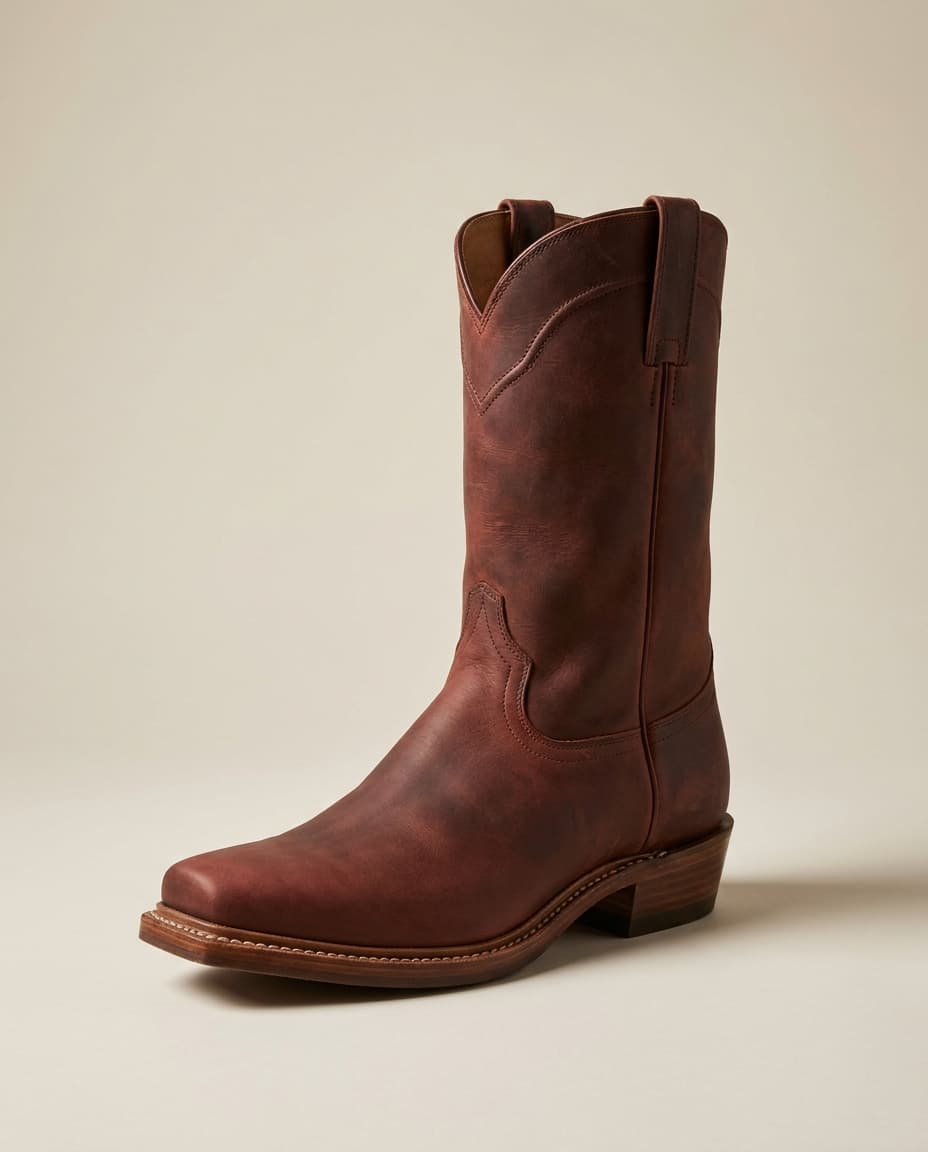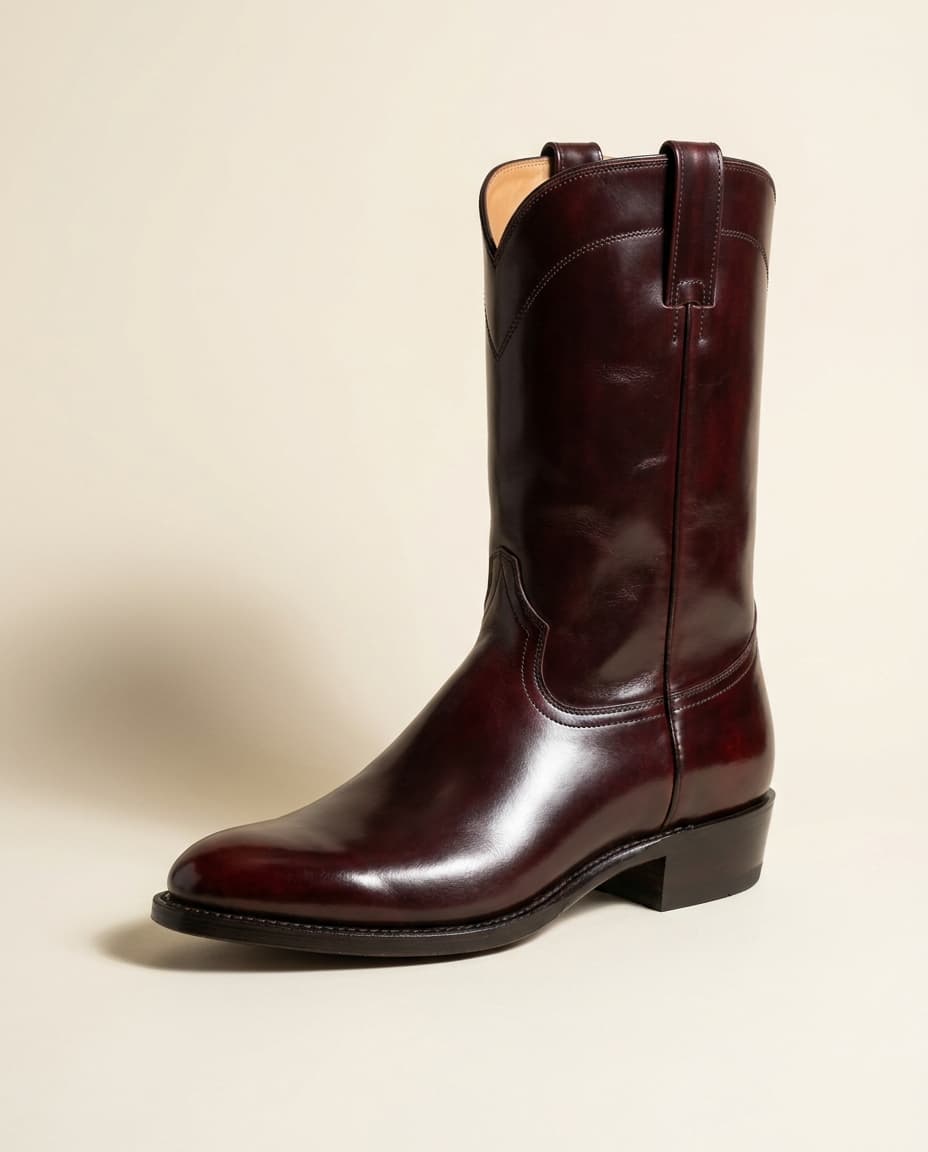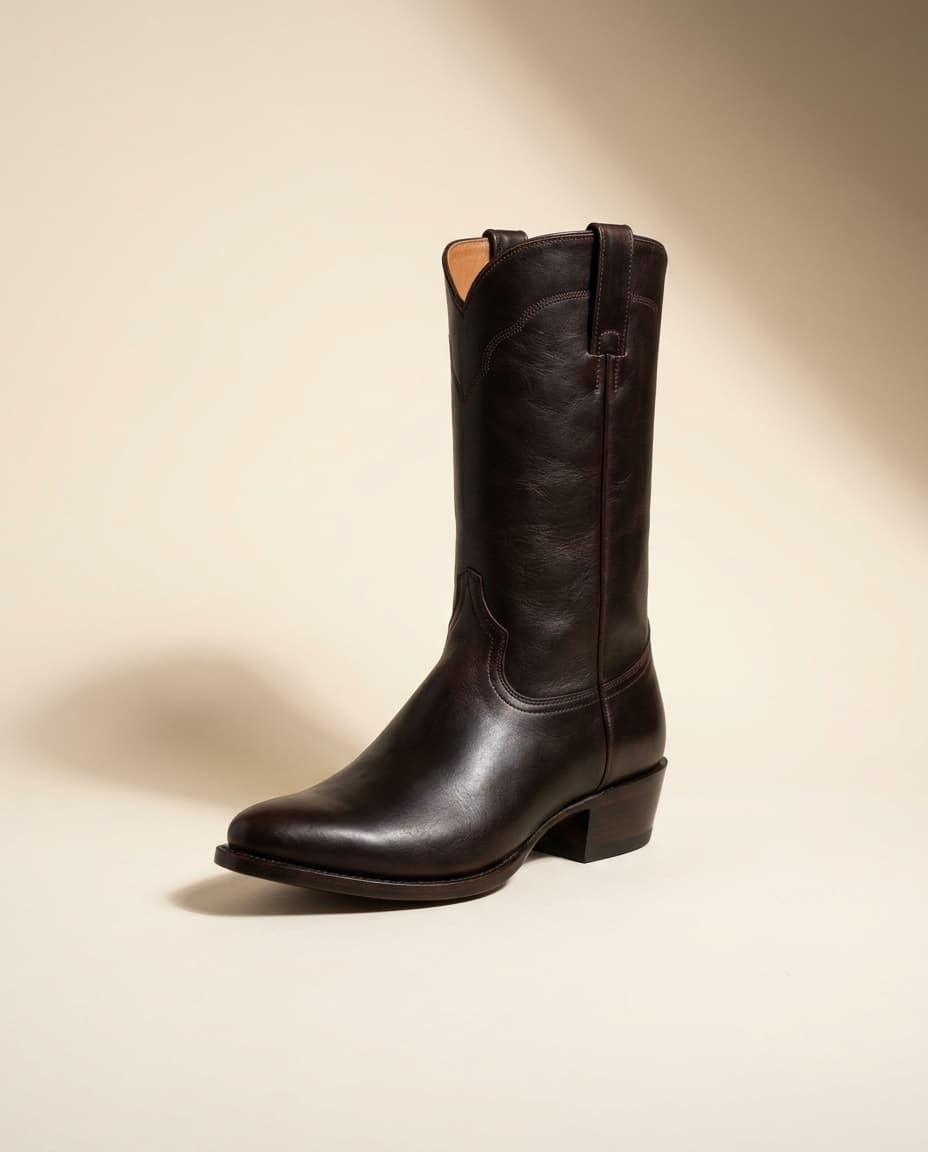
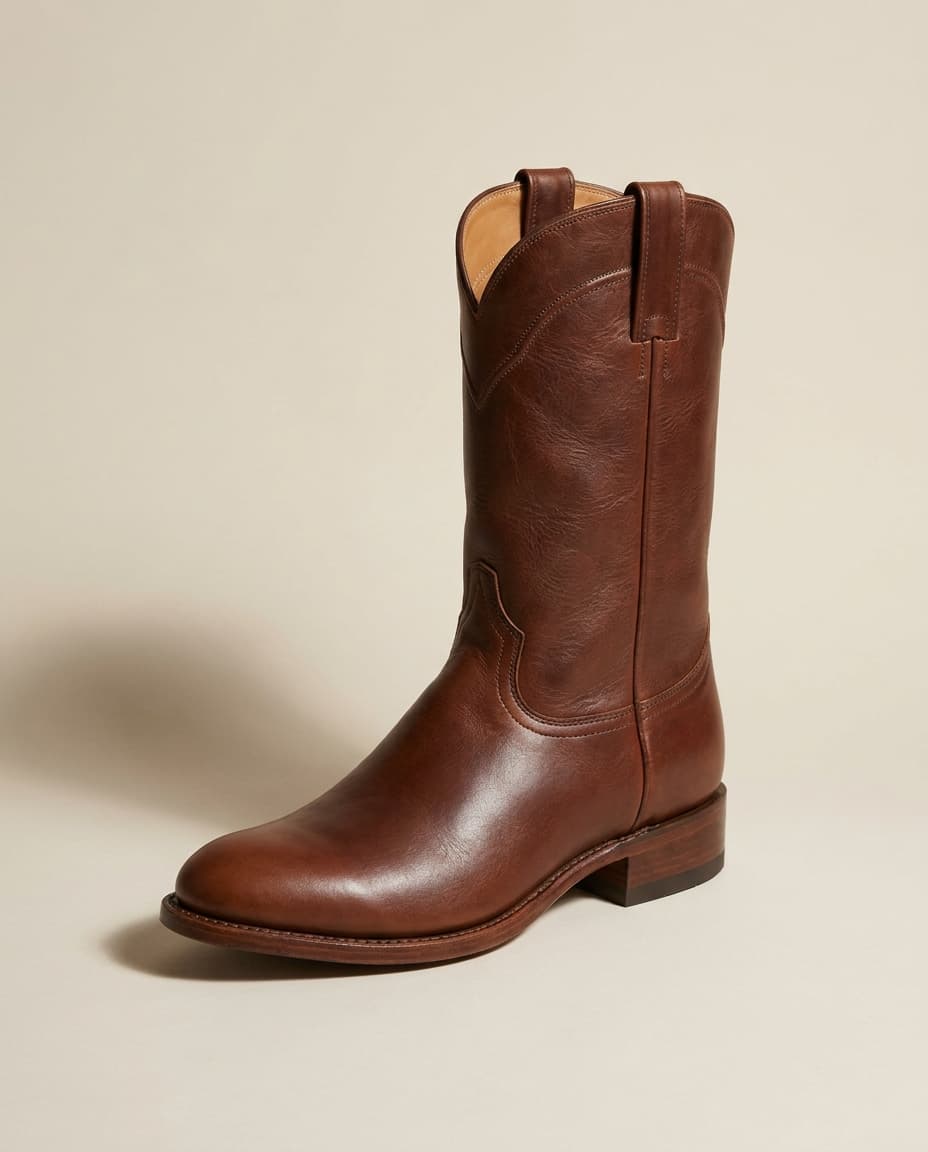
Editorial product photograph of The Arroyo, a dark whiskey full-grain leather snip-toe stovepipe western boot with a 12 inch shaft and an underslung leather heel
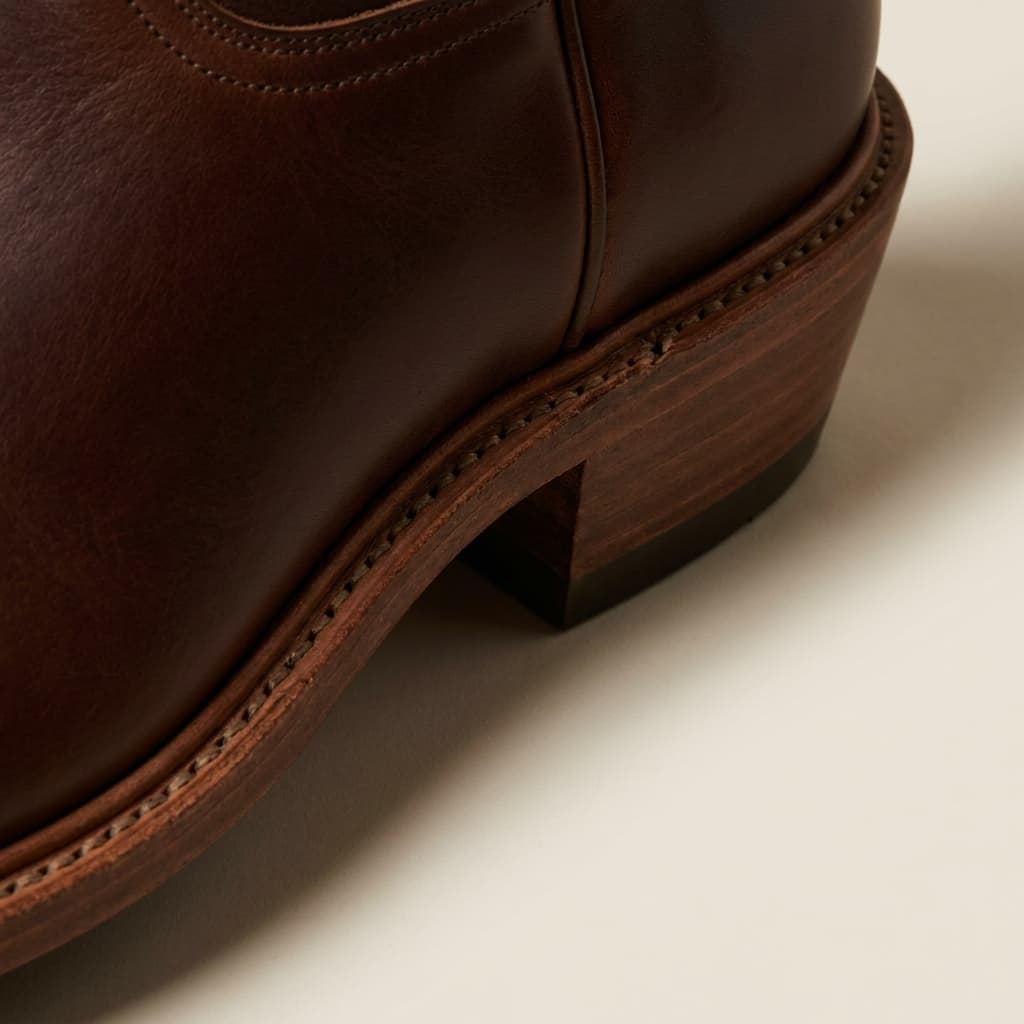
Hand-welt and sole-edge detail of The Arroyo: hand-welted leather sole with a steel shank, full-grain bovine in dark whiskey, vegetable-tanned
The hand-welt · hand-welted leather sole with a steel shank

Arroyo last

The Arroyo

Stovepipe shaft, snip toe, dressed for evenings.

$695

Demo only. The cart works in your browser; checkout is a demo modal and no payment is processed.

  • Hand-welted in the Arroyo last; resoleable twice.
  • Full-grain bovine in dark whiskey, vegetable-tanned.
  • Snip toe, Underslung 1.75 inch, 12 inch shaft.

Construction

How The Arroyo is built.

The Arroyo is the dress boot. A 12 inch stovepipe shaft, a snip toe, and an underslung heel that reads as dressed without being costume. Wear it under a suit; it earns its place.

Leather
Full-grain bovine in dark whiskey, vegetable-tanned
Sole and welt
Hand-welted leather sole with a steel shank
Shaft
12 inch
Toe and heel
Snip, Underslung 1.75 inch
  • Hand-stitched 12 inch shaft with traditional Texas star
  • Underslung 1.75 inch leather stacked heel
  • Hand-welted leather sole with steel shank
  • Pull straps and inside scallops on the shaft

Fit

Sizing and break-in.

Snip toes need a half-size more than a round-toe boot in the same last. Confirm Brannock width.

Break-in: Five to seven wears for the heel pocket; the snip toe takes about a week to mould.

Sizing is named here, on the product page, not in an FAQ. Returns are 30 days on unworn pairs; resole at cost for life.

More from the collection.

See all six
Pinto Mesa Boots is a fictitious demo build. No real orders are placed; checkout is a clearly labeled demo modal.

RampStack

Built by the RampStack trinity

How Pinto Mesa Boots was built

The four-stage workup behind this standout ecommerce demo, summarized. Generalized and pattern-level; no named competitors. The full Format A spec and the verification log live in the operated-side run record.

Stage 01

Basano · competitor review

  • Standout-ecommerce western-boot homepages split the field into two camps that both leave a position on the table. The DTC-scale players over-rotate on social proof (volume star ratings, press logos, discount cadence) at the expense of the craft narrative the visitor came for; the craft makers under-invest in storefront polish (slow loads, weak SSR, inconsistent product schema, low-resolution photography) so the work does not surface against the field default.
  • Brand-story and maker biography are rarely above the fold. Three of four audited storefronts route the visitor into a discount banner or a SKU grid first; the maker, the leather, and the construction are reached only via an About link in the footer or a mid-page tile. Even on craft-positioned sites, the homepage hierarchy treats craft as supporting copy rather than as the conversion lever the visitor is evaluating against.
  • Sizing and break-in guidance is absent or buried. The field treats sizing as an FAQ link or a tab inside the product page rather than as load-bearing content on the path to add-to-cart. A first-time western-boot buyer asks two questions before they will commit: who made it, and how will it fit. The field answers question one weakly and question two not at all on most homepages.
  • On-page SEO and structured data are uneven across the field. Title tags lean to brand-only on the top sites; Product schema is present on detail pages but inconsistent in price and availability fields; BreadcrumbList is rare. The structured-data gap is mechanical and is the cheapest standout to ship against.
  • Above-the-fold density varies wildly. Two of four homepages pile a marquee carousel, a promotional band, and a SKU strip above the first scroll; the other two run an editorial hero with one clear product entry point. The editorial-restraint storefronts read as more expensive and convert better on first-impression, which is what the standout-ecommerce shape is supposed to do.
  • Photography quality is the field's single biggest tell. The shoot-quality difference between the DTC scale players and the smaller craft makers is the gap a new standout brand can close fastest by investing in editorial product photography over volume product photography.

Stage 02

Krine · positioning

Position
Brand-story-and-craft-led standout western-boot boutique. The hero declares the maker, the leather, and one construction claim, with an editorial entry point into a small curated collection; the product detail page carries construction detail, sizing guidance, and break-in expectation language as load-bearing content rather than as FAQ-tier afterthought; no discount banner appears above the fold. The position the audited field splits around: DTC scale on one side, polish-poor craft on the other, leaving the polished editorial standout boutique uncontested.
Archetype
common-hand-clothing
Voice
Story-forward, leather-literate, third-person about the maker, present-tense for the current collection. Numbers and material before adjectives.

Stage 03

Tholo · build plan

home

  • competitor-experience-audit
  • vertical-site-conventions
  • landing-page-copy
  • information-architecture
  • frontend-component-build
  • seo-onpage

collection

  • information-architecture
  • frontend-component-build
  • seo-onpage

product detail

  • landing-page-copy
  • frontend-component-build
  • seo-onpage

craft

  • landing-page-copy
  • frontend-component-build

cart (demo)

  • frontend-component-build
  • landing-page-copy

workup

  • landing-page-copy
  • frontend-component-build

Stage 04

Basano · verification

Holds(8)

  • Heading hierarchy holds across all six pages: exactly one H1 per page, H2 / H3 sequence with no skipped levels.
  • Language declaration, semantic landmark structure (header, main with id=main-content, footer, nav with aria-label), and the skip-navigation link via ShowcaseMetaLayer are all present and correctly wired across the microsite.
  • JSON-LD Organization (with a Brand subtype) on the layout and Product schema on the detail page; BreadcrumbList included on the detail page for the structured-data gap surfaced in Stage 1.
  • Hero zone carries the load-bearing standout-ecommerce conventions: maker identity, a material/construction claim, and an editorial entry point into the collection are all above the fold; no discount banner in the first viewport (the discount-led default the audited field defaults to is explicitly inverted).
  • Product detail page carries construction detail, sizing guidance, and break-in expectation language as load-bearing content (Stage 1 surfaced the field-wide gap where these live as FAQ-tier afterthought).
  • Working client-side cart with real input validation (per-size add, line removal, quantity adjustment) and a clearly labeled demo-only checkout modal. The card is not charged; no data is stored.
  • Counsel-restrained common-hand register held: warm stone-and-amber palette, serif lockup, restrained typographic hierarchy, story-forward voice across pages.
  • Demo-only labeling on the cart and checkout surfaces is consistent and visible: amber 'Demo only' tags on the modal header, footer disclaimer site-wide, no fabricated reviews or fabricated press logos.

Fails(5)

  • Intentional noindex and nofollow on the demo build (correct for a demo, flagged by the verifier across pages against a production-ready standard). Same not-a-defect-in-context the prior demos carry.
  • Canonical URL declares the production rampstack.co host while the build is served from localhost during the audit; cross-origin canonical mismatch is the localhost-vs-production artefact, not a real defect. Recurring across all pages.
  • Title tags and H1s on inner pages lean structural (Collection, The craft, Cart) rather than search-keyword-aligned. Judgment item for the showcase context; a live western-boot boutique build would target topical keywords explicitly.
  • Product detail page (The Mesa) carries fictitious craft and maker narrative; intentional for the showcase build, flagged against a production-ready standard.
  • Logo-less type lockup; the SVG hero is the type-led placeholder this batch ships with. The logo pass is a separate per-brand later dispatch.

Not assessable(5)

  • Core Web Vitals and page experience (no field data in a static-fetch audit).
  • robots.txt and XML sitemap content (single-page audit does not crawl).
  • Checkout payment backend integration (none in this build by design; demo-only validation flow).
  • Real-world inventory and shipping integrations (intentionally absent; demo-only).
  • Mobile responsiveness past basic reflow at the audit viewport (separate device captures required).