Western Guji, Ethiopia · 1,950 to 2,150 m · Washed

Hambela Wamena.

Hambela cooperative. Roasted weekly in Brooklyn.
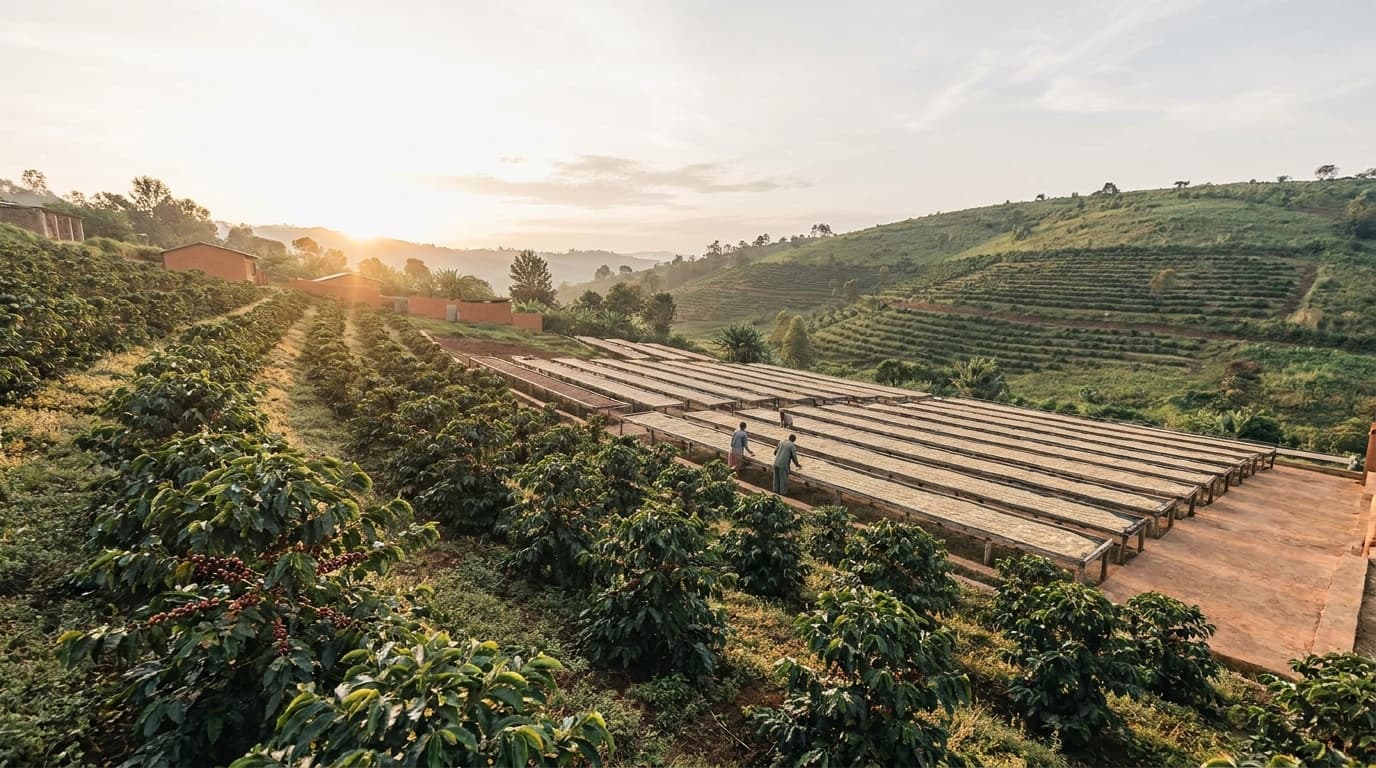
Wide documentary landscape photograph of Hambela Wamena at 1,950 to 2,150 m in Western Guji, Ethiopia: rows of coffee trees on a hillside, the wet-mill drying patio in the middle distance, warm morning light, no identifiable close portraits

The farm

Hambela Wamena sits in western Guji, Ethiopia, at 1,950 to 2,150 metres. The Hambela cooperative pools wet-mill capacity for roughly four hundred smallholder farms in the surrounding kebeles; each lot comes back to its grower for traceability. The cooperative was founded in 2009 and operates one of the better-equipped washing stations in the region.
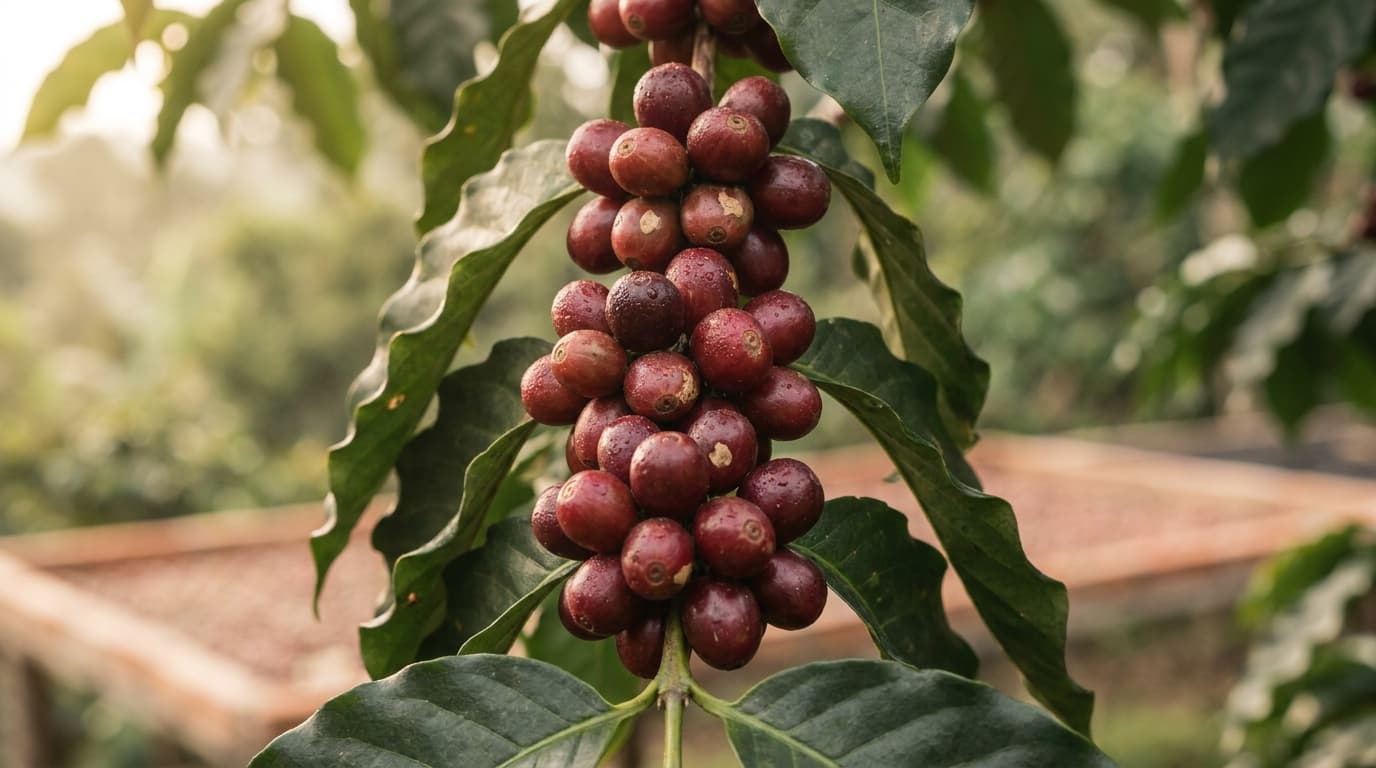
Documentary close-up photograph of ripe red coffee cherries on the branch at Hambela Wamena: cherries at full ripeness ready for picking, soft natural side light, dew still on a few cherries, no hands in frame

The process

Picked at full cherry ripeness and depulped within hours. Fermented under water for thirty-six hours, then washed clean, then dried on raised beds for eleven to fourteen days. The bed system gives even airflow underneath; the result is a clean cup with the floral acidity Guji is known for.
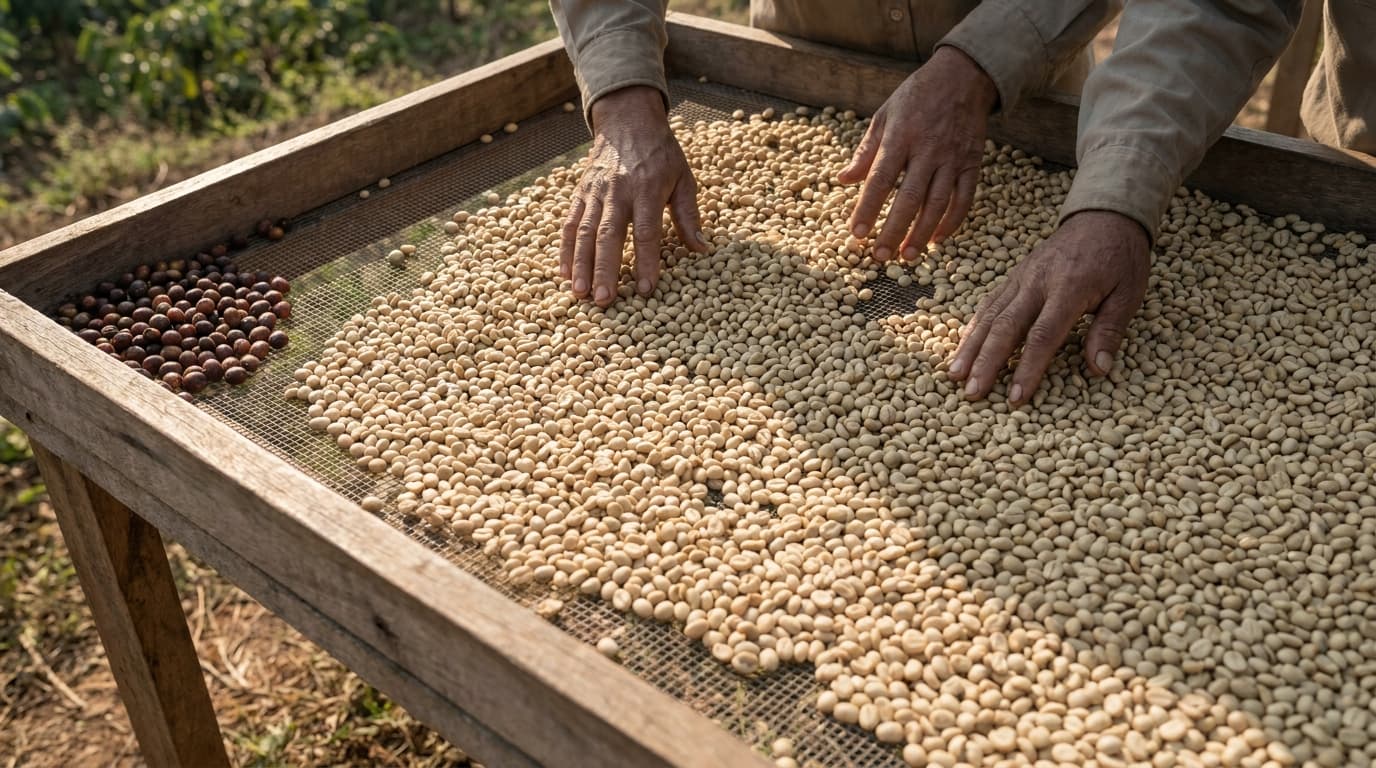
Documentary photograph of hands sorting parchment coffee beans on the wet-mill drying patio at Hambela cooperative: only the hands and the beans visible in frame, no faces, warm directional light on the drying parchment, beans in mid-sort being moved across the patio

The cup

Light-to-medium brings out orange-blossom, bergamot, and a bright tea-like acidity. Medium-to-dark deepens to cocoa and almond with a milk-chocolate body. We roast this lot weekly; the bag in your next box was on the cooler within the past seven days.

Subscribe and get this lot.

Pick your cadence and your roast profile; the first box ships within seven days of the next weekly roast. Demo only; no payment is processed.

Northbound Coffee Co. is a fictitious specialty coffee subscription built as a RampStack showcase demo. Farms named in copy are real growing regions; specific cooperatives and dates are demo placeholders. No subscriptions are processed and no payment is taken.

RampStack

Built by the RampStack trinity

How Northbound Coffee Co. was built

The four-stage workup behind this subscription app demo, summarized. Generalized and pattern-level; no named competitors. The full Format A spec and the verification log live in the operated-side run record.

Stage 01

Basano · competitor review

  • Subscription-app coffee homepages split the field into two camps. The mass-market grocery brands lead with promotional cadence and product carousels; the specialty roasters lead with editorial farm narratives but bury the subscription mechanics two clicks behind the storefront. The position the field leaves on the table is a specialty-grade subscription where the cadence picker, the pause and swap controls, and the next farm are all visible above the fold.
  • Subscriber controls (cadence, pause, skip, swap) are routinely treated as account-settings features rather than as load-bearing surfacing on the homepage. The leading subscriber-first sites that DO surface controls early convert better; the leading specialty roasters that bury them under a generic Shop or Subscribe link forfeit the conversion to brands that ship more on the marketing layer and less on the coffee.
  • Named-farm specificity is present at the specialty tier but inconsistent in placement. Origins are surfaced on product pages and blog posts but rarely at hero density. A homepage that names this month's farm by name, with the country and the process, is the position a new specialty subscriber-first brand can occupy without contesting the established specialty roasters on their own ground.
  • Trust signals (roasted-on date, freshness guarantee, free shipping, no-contracts) are surfaced inconsistently and usually as a footer-tier band. Surfacing them as a discrete trust strip near the subscribe CTA is the structural standout the audited field leaves available.
  • Photography quality at the specialty tier is high but heavily concentrated on the bean and the cup. Farm-and-process photography (drying patios, coffee cherries on the branch, hands sorting beans) is rarer and is what grounds the single-origin claim. A documentary-honest photography pass is the cheapest visual standout for a new entrant.

Stage 02

Krine · positioning

Position
Editorial-restrained, documentary-honest specialty coffee subscription. Type-led editorial layout with farm photography supporting the type; subscriber-first commerce (cadence picker, roast-profile toggle, pause and swap) surfaced as features; named-farm specificity at hero density; trust signals as a discrete strip near the subscribe CTA. Editorial Restrained with Documentary Honest as composition secondary; selected via the creative-brief-selector skill; full brief at progress/subscription-app-northbound-coffee-brief.md.
Archetype
hewn-skincare
Voice
Subscriber-direct and farm-specific. Second person addressing the subscriber. Plain language. Named farms, named processes, named roast dates. No marketing inflation.

Stage 03

Tholo · build plan

home

  • creative-brief-selector
  • competitor-experience-audit
  • vertical-site-conventions
  • landing-page-copy
  • information-architecture
  • frontend-component-build
  • seo-onpage

subscribe (demo)

  • frontend-component-build
  • landing-page-copy

this month

  • landing-page-copy
  • frontend-component-build

workup

  • landing-page-copy
  • frontend-component-build

Stage 04

Basano · verification

Holds(9)

  • Heading hierarchy holds across all four pages: exactly one H1 per page, H2 / H3 sequence with no skipped levels.
  • Language declaration, semantic landmark structure (header, main with id=main-content, footer, nav with aria-label), and the skip-navigation link via ShowcaseMetaLayer are all present and correctly wired across the microsite.
  • JSON-LD Organization on the layout (with Brand subOrganization for Northbound Coffee Co.); BreadcrumbList on every non-home page; Service schema on the subscribe page with a priceSpecification for each cadence option.
  • Hero zone carries the load-bearing subscription-app conventions: this month's origin (Hambela Wamena, western Guji, Ethiopia) named explicitly in the eyebrow; cadence picker and roast-profile toggle visible above the fold; the primary subscribe CTA one click from any of these controls.
  • How-it-works strip surfaces the pause/skip/swap controls as features, named in plain language, not buried in account settings copy.
  • Working client-side subscription state with real input validation (cadence, profile, address) and a clearly labeled demo-only checkout modal. No payment is processed; no data is stored.
  • Editorial-restrained register held: paper-cream and parchment surfaces with coffee-dark text, sage green and terracotta accents, Spectral 400 and 600 for display, Inter 400 and 500 for body, IBM Plex Mono 400 for the roast-date printed-on-bag treatment (loaded via next/font/google with CSS variables, substituted for the brief's Inter Mono reference which is not a Google Fonts family), serif small-caps micro-labels at tracking-[0.06em] rendered via font-variant-caps small-caps on Spectral (the explicit type-system differentiator from Pinto Mesa's sans uppercase at the same tracking).
  • Demo-only labeling on the subscribe and checkout surfaces is consistent and visible: terracotta 'Demo only' tags on the modal header, footer disclaimer site-wide, no fabricated reviews or fabricated press quotes.
  • Documentary editorial photography shipped across the home page (origin-of-the-month hero, three image-led step cards, farm-wide preview, two roast-profile still-lifes, roastery atmospheric ground at low opacity behind the CTA close) and the this-month farm story (cherries close, hands sorting beans on the drying patio). Generated through the v2 image pipeline in showcase-demo mode as one consistent shoot treatment: one editorial documentary register in the Onyx Coffee Lab and Counter Culture register, warm directional natural light, paper-cream and coffee-brown palette with sage and terracotta naturally found, geographic specificity (Hambela Wamena in western Guji, Ethiopia at 1,950 to 2,150 metres) carried in the prompts for the farm slots. Honesty constraints held: no fabricated identifiable portraits anywhere in the set (people present only as hands cropped at the wrists or as distant figures with faces away from camera), no real-brand packaging or trade dress on any bag or box (all packaging unbranded kraft with only the printed roasted-on date stamp), no country-of-origin labels or flags. Verifiable against the rendered home and this-month pages.

Fails(4)

  • Intentional noindex and nofollow on the demo build (correct for a demo, flagged by the verifier across pages against a production-ready standard). Same not-a-defect-in-context the prior demos carry.
  • Canonical URL declares the production rampstack.co host while the build is served from localhost during the audit; cross-origin canonical mismatch is the localhost-vs-production artefact, not a real defect. Recurring across all pages.
  • Title tags and H1s on inner pages lean structural (Subscribe, This month) rather than search-keyword-aligned. Judgment item for the showcase context; a live specialty-coffee subscription would target topical keywords explicitly.
  • Logo-less type lockup; the Spectral small-caps wordmark over paper-cream is the type-led placeholder this batch ships with. The logo pass is a separate per-brand later dispatch.

Not assessable(5)

  • Core Web Vitals and page experience (no field data in a static-fetch audit).
  • robots.txt and XML sitemap content (single-page audit does not crawl).
  • Real subscription billing backend integration (none in this build by design; demo-only validation flow).
  • Real freshness-guarantee fulfilment (intentionally absent; demo-only).
  • Mobile responsiveness past basic reflow at the audit viewport (separate device captures required).