← ShowcaseClearflow InitiativeInstitution + mission / counsel-law
See how it was builtView other demos
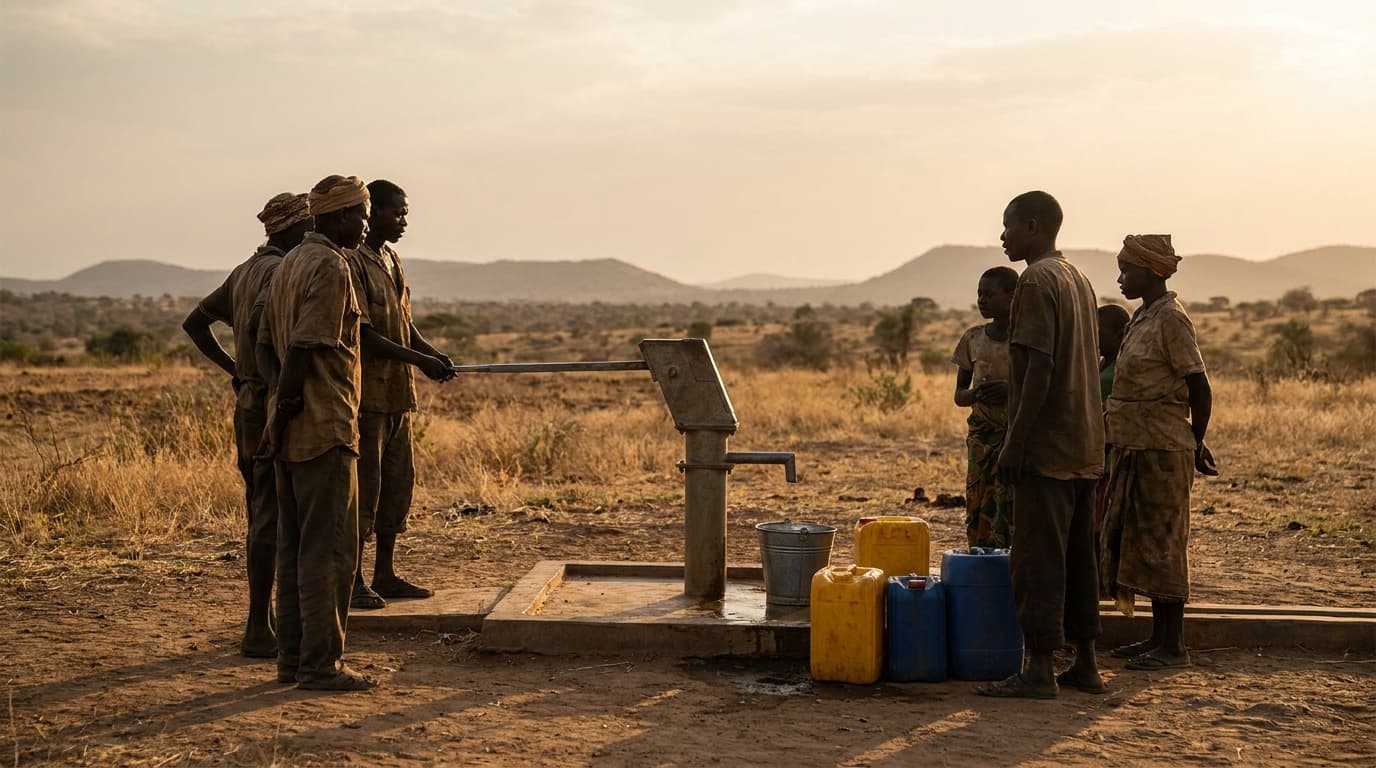
Documentary photograph of a small rural community gathered at a working hand-pump borehole in golden-hour light, taken at respectful middle distance, with plastic jerrycans and a galvanised bucket on the concrete plinth and low dry hills on the horizon

Clearflow Initiative · A demo build

Clean water, measurably delivered.

We build community-owned water systems, train local operators, and publish every dollar we deploy and every system we hand over. Evidence first; appeal second.

Program spend ratio
87%
of every dollar reaches the field

Where the work has gotten to (lifetime)

412,500 lives reached. 1,146 systems built. 318 communities served.

Lives reached
412,500
Counted at system handover, verified by post-handover monitoring.
Water systems built
1,146
Wells, sanitation blocks, and rainwater systems combined.
Communities served
318
Across 9 countries; 12 years operating.

These numbers are illustrative for the demo build. A real Clearflow homepage would source them from the published annual report and the public monitoring database; the convention being demonstrated is putting them where a first-time visitor scans before they consider the donation ask.

What the organization actually does

All programs

Three program lines. Each line owns one named outcome metric. Funding allocation is published, not concealed in an appendix.

  • East and Southern Africa (Kenya, Malawi, Mozambique)

    Community well construction

    Hand-drilled wells with a community-owned operator from day one.

    Wells built to date
    812
  • Rural Kenya, Uganda, Tanzania

    Sanitation systems

    Latrine blocks at schools and clinics, paired with menstrual hygiene infrastructure.

    Systems built to date
    212
  • All active geographies

    Operator training and certification

    Local operators trained, certified, and paid; not volunteers.

    Certified operators
    640
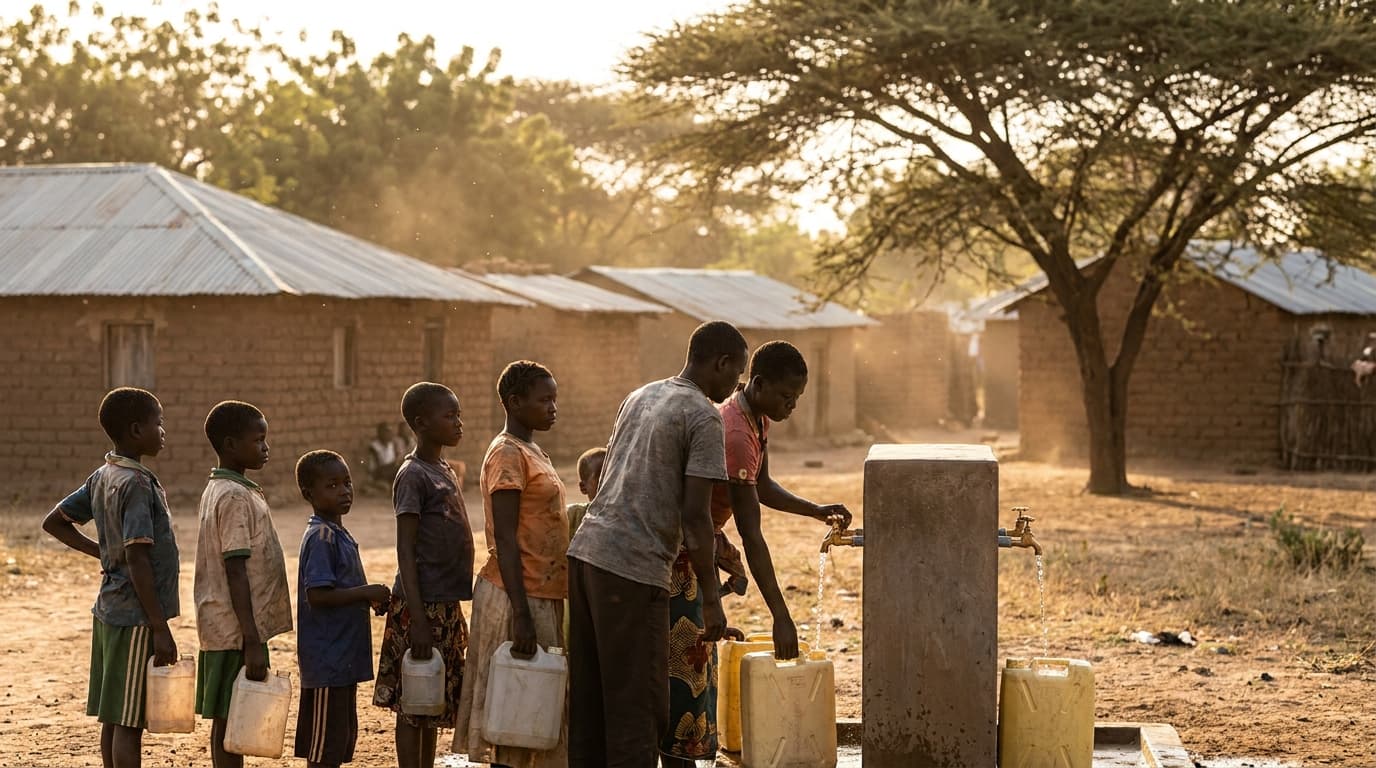
Documentary photograph of children and adults lined up at a simple cast-concrete public tap stand in a village, water visibly flowing, taken at respectful middle distance with mud-brick homes and an acacia tree in the warm afternoon background

Governance and financials

Accountability on the home page.

Audited financials, board composition, and third-party ratings live where a donor making a first-time decision can see them, not three clicks deep. This is the convention the field's leading homepages leave off.

Leadership and audited financials
  • Audited annuallyPublic, mid-sized regional CPA firm (demo placeholder)
  • Board seats9
  • Charity NavigatorFour-star (demo placeholder)
  • Candid PlatinumYes (demo)
  • The values above are demo placeholders. A real Clearflow page would link to the actual audited financials and the third-party rating profiles.

Where the money goes

A donor evaluating Clearflow should be able to see where every dollar lands without leaving the home page.

Direct program work
87%
Field operations, materials, training, and program staff.
Administration
8%
Finance, governance, technology, and back-office staff.
Fundraising
5%
Donor communications, events, and grant writing.

Decide on evidence.

The donation flow is demo-only. Real builds need a real payment processor; this demo deliberately does not have one. Use the flow to see how the institution-mission shape handles the action close.

Demo only - no payment is processed

Make a donation

This is a demo. Submitting this form does not charge a card and does not contact Clearflow staff. No real organization exists; no data is stored.

Cadence
Amount (USD)

Your selection: $50 one-time

Read the cause first
RampStack

Built by the RampStack trinity

How Clearflow Initiative was built

The four-stage workup behind this institution + mission demo, summarized. Generalized and pattern-level; no named competitors. The full Format A spec and the verification log live in the operated-side run record.

Stage 01

Basano · competitor review

  • Institution-mission nonprofit homepages share a field-wide miss on data transparency: measurable program outcomes (lives reached, water systems built, dollars deployed, program-spend ratio) are not featured prominently on the home page. The field defaults to problem-size statistics ('X million people lack access to clean water') rather than results-of-our-work statistics. Donors evaluating an org cannot scan org-effectiveness from where they actually look first. Only one of four leading homepages audited surfaces outcome numbers at featured-type weight; the rest bury them in annual reports.
  • Mission lines across the field are emotionally evocative but rarely theory-of-change specific. 'Bring clean and safe water to every person on the planet' / 'Safe water protects and saves lives' / 'Clean water changes everything' are interchangeable across the leaders' homepages. They state the outcome the org pursues, not what makes its approach distinct. Where a differentiating theory-of-change line exists ('we don't just build projects, we change systems') it sits mid-page, not in the hero. The visitor cannot tell from the hero what differentiates one nonprofit's approach from another.
  • No prominent governance, financials transparency, or third-party validation callout appears on any of the leading homepages audited. Each org's brand recognition substitutes for on-page evidence of accountability. A new nonprofit benchmarking against the field would miss that the absence is a credibility-relying default, not an evidence-bearing standard. The largest blue-ocean gap available to a new entrant.
  • Primary action prominence varies dramatically across the field. The two homepages with embedded donation widgets above the fold (donation amount selectors visible in the hero zone, not behind a click-through) lead the field on conversion intent. The other half deliver mission storytelling above the fold and route the visitor to a separate donation page; the funnel break costs them. Above-the-fold donation-form prominence is the field's single most variable design decision.
  • Photography register is the field's shared strength: every audited homepage leads with edge-to-edge dignified beneficiary photography, full-bleed background. Documentary tone; not stock photography or abstract imagery. The convention is solid and stable; a new entrant should not invert it.
  • Below-the-fold narrative architecture is also stable across the field: every homepage surfaces multiple programs, stories, or engagement paths after the hero, giving the visitor concrete cases rather than aggregate language alone. The convention is solid; the work is to make the cases evidence-bearing (named numbers, named geographies) rather than emotionally generalized.

Stage 02

Krine · positioning

Position
Evidence-and-mission-first clean-water nonprofit. The hero declares the theory of change and the program-spend ratio together; the mid-page surfaces hard outcome numbers (lives reached, water systems built) before the donation ask; an explicit governance-and-financials callout makes the org's accountability visible on the homepage, the position the four leading nonprofit homepages leave on the table.
Archetype
counsel-law
Voice
Restrained, citation-bearing, third-person about the org, present-tense, low-register confidence. Numbers before adjectives.

Stage 03

Tholo · build plan

home

  • competitor-experience-audit
  • vertical-site-conventions
  • landing-page-copy
  • information-architecture
  • frontend-component-build
  • seo-onpage

cause

  • landing-page-copy
  • information-architecture
  • frontend-component-build

programs

  • landing-page-copy
  • information-architecture
  • frontend-component-build

give (demo)

  • frontend-component-build
  • landing-page-copy

about

  • landing-page-copy
  • frontend-component-build

workup

  • landing-page-copy
  • frontend-component-build

Stage 04

Basano · verification

Holds(10)

  • Heading hierarchy holds across all five pages: exactly one H1 per page, H2 / H3 sequence with no skipped levels.
  • Language declaration, semantic landmark structure (header, main with id=main-content, footer, nav with aria-label), and a skip-navigation link all present and correctly wired across the microsite.
  • JSON-LD NGO + CreativeWork emitted on every page via the shared layout. NGO carries name, legalName, description, url, foundingDate, address, taxID. The NGO subtype is the correct schema choice for a nonprofit.
  • Hero zone holds the load-bearing institution-mission conventions: theory-of-change headline (the field's interchangeable mission lines were the Stage 1 miss), program-spend ratio surfaced as a featured number, and an embedded donation widget all visible above the fold.
  • Mid-page evidence band carries three featured outcome numbers (lives reached, water systems built, communities served) at the page's largest type weight, before the donation ask. The Water Project pattern, moved up.
  • Governance and financials callout is present on the home page (audited annually, board seats, third-party ratings) and expanded on the About page with an audited-financials table. The field-wide gap from Stage 1 that none of the four leading homepages addressed.
  • Action close uses two paths max (one primary donate, one secondary read-the-cause); the field's three-orange-button dilution pattern from Stage 1 is avoided.
  • Demo-only labeling on the donation flow is consistent and visible: amber 'Demo only' tags on the modal header, an amber banner on the give page, footer disclaimer site-wide.
  • Working client-side donation modal with real input validation (amount cadence, name, email) and a clearly labeled demo-only success state. The card is not charged; no data is stored. Demo-only contract held cleanly.
  • Counsel-law archetype register held: warm cream and forest-green palette, serif lockup, restrained typographic hierarchy, citation-bearing voice (numbers before adjectives) consistent across pages.

Fails(6)

  • Intentional noindex and nofollow on the demo build (correct for a demo, flagged by the verifier across pages against a production-ready standard). Same not-a-defect-in-context the four prior demos carry.
  • Canonical URL declares the production rampstack.co host while the build is served from localhost during the audit; cross-origin canonical mismatch is the localhost-vs-production artefact, not a real defect. Recurring across all five pages.
  • Structured-data polish: a CreativeWork is emitted alongside the NGO on every page (the established showcase-layer convention from the four prior demos). For a nonprofit, NGO alone would be the cleanest semantic; CreativeWork is defensible as the showcase-record-as-artifact wrapper. The give page would also benefit from a DonateAction block in a production build; emitted only NGO here.
  • Title tags and H1s on inner pages lean structural (Cause, Programs, About) rather than search-keyword-aligned. Judgment item for the showcase context; a live nonprofit build would target topical keywords explicitly.
  • About page leadership and governance fields carry '(Demo placeholder)' strings rather than real biographies. Intentional for the fictitious-org demo; flagged against a production-ready standard.
  • Meta description on the home page explicitly labels the org as fictitious; correct for showcase context, flagged by the verifier against a production page where the description would otherwise drive SERP CTR.

Not assessable(5)

  • Core Web Vitals and page experience (no field data in a static-fetch audit).
  • robots.txt and XML sitemap content (single-page audit does not crawl).
  • Donation payment backend integration (none in this build by design; demo-only validation flow).
  • Real-world third-party rating consistency (Charity Navigator, Candid Platinum values are demo placeholders; not assessable against external sources).
  • Mobile responsiveness past basic reflow at the audit viewport (separate device captures required).