Common Hand · Spring capsule
Garments that age into family.
We started this collection in a mill in Umbria, on a loom that has been threading indigo wool since 1958. The story is in the cloth before it is in the coat.
No. 01
The collection.
Three pieces this season, each tied to a working mill and a maker we have visited. We keep the run small on purpose.
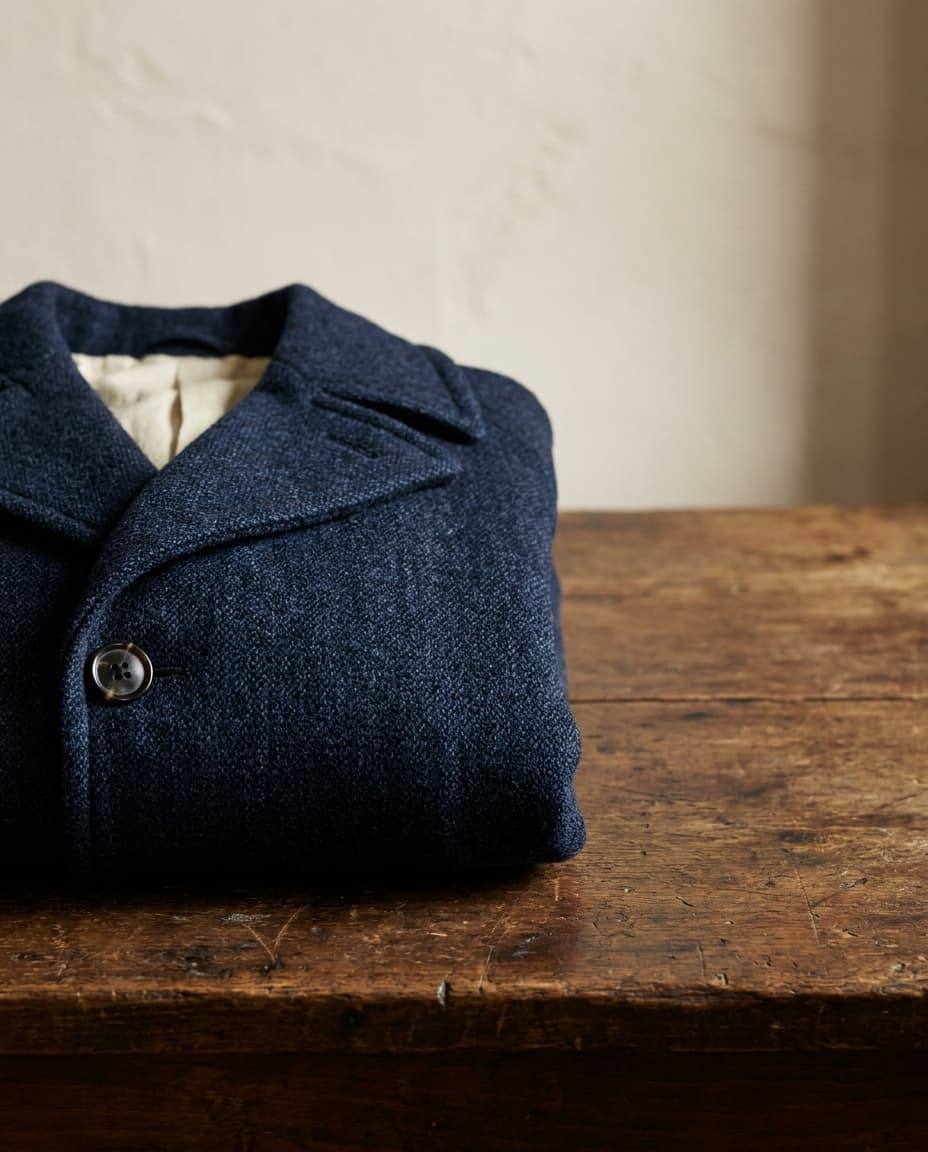
The Indigo Topcoat
Woven at the Caprai mill in Umbria, finished by hand in a small Brooklyn workshop.
Read the story →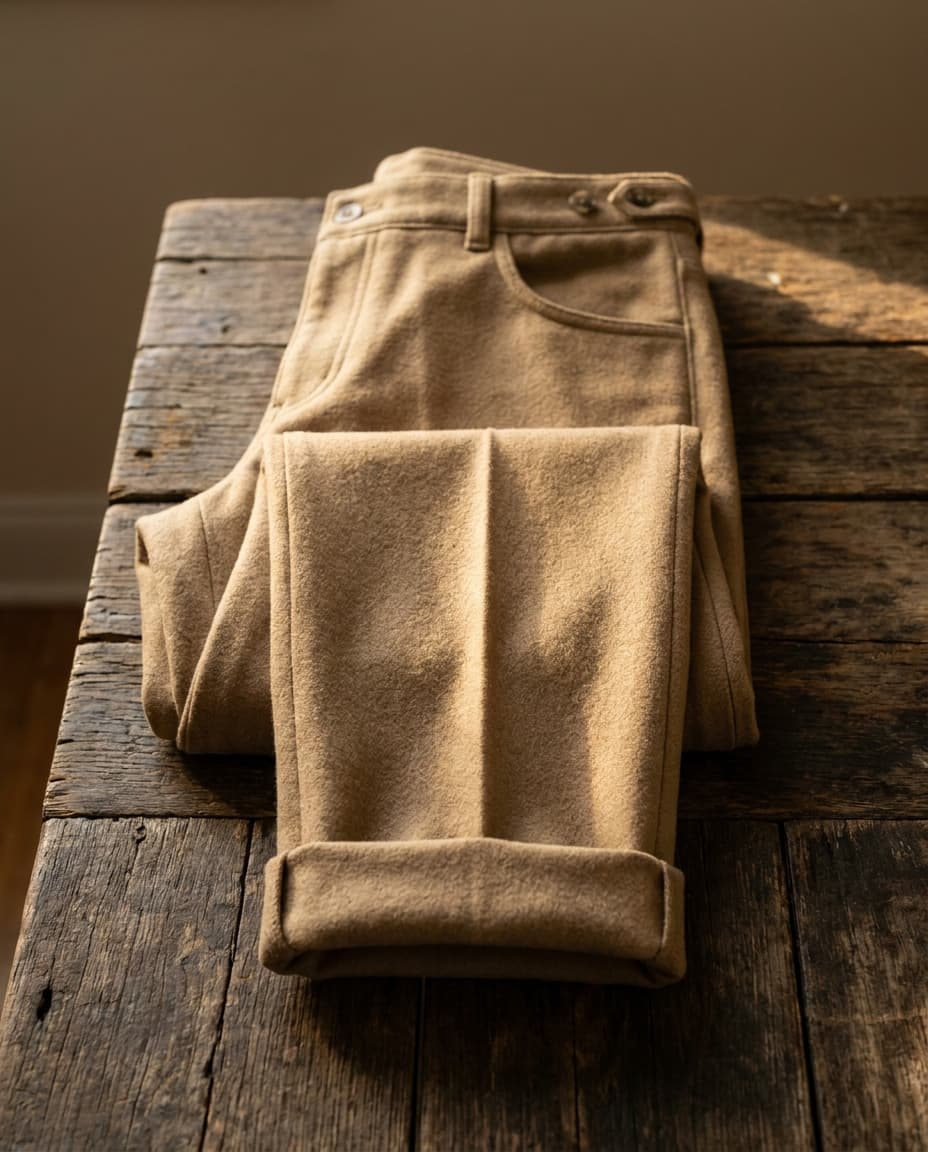
The Workshop Trouser
Cut from a Yorkshire worsted twill that has been milled in the same valley since 1922.
Read the story →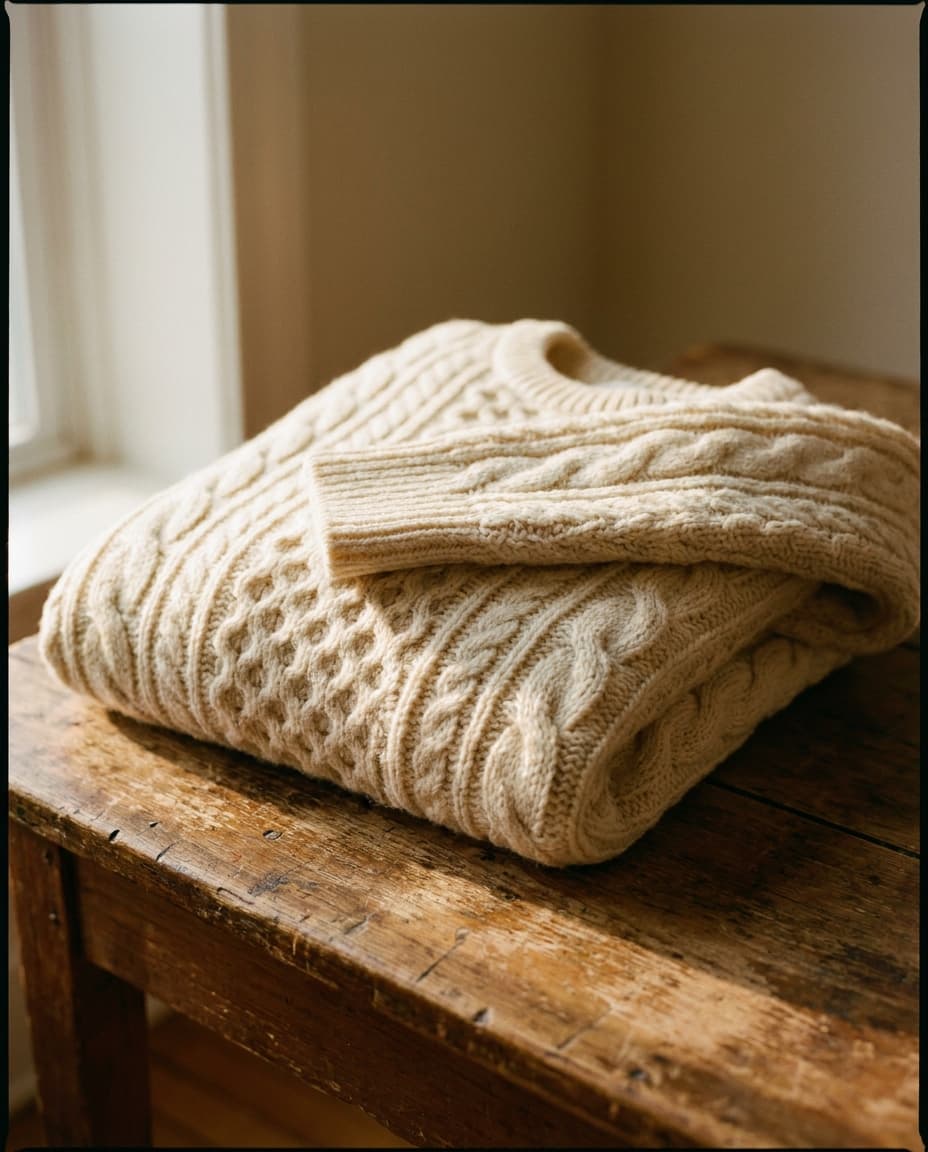
The Mended Knit
Spun from undyed Donegal wool, knit on a narrow-gauge frame in a converted barn outside Kilcar.
Read the story →
No. 02 · Provenance
About the cloth.
Caprai indigo wool, woven in Umbria since 1958.
The Caprai mill sits at the bottom of a narrow road outside Foligno, in the part of Umbria where the hills give way to olive groves and the river runs slow most of the year. Giuseppe Caprai opened the mill in 1958 with two looms and a contract for postal-worker uniforms. His granddaughter Chiara runs it now. There are eleven looms, six of them older than she is, and a small team of weavers who have been there long enough to know each loom by sound.
The indigo we use is dyed in batches of forty meters, no more, because that is the size of the vat Giuseppe built and Chiara has refused to replace. Each batch comes off the line a fractionally different shade. The cloth that becomes our topcoat carries the memory of that vat in a way that piece-dyed industrial wool never quite manages, and it ages the way the mill ages, which is to say slowly and toward something darker and more itself.
A cloth this old does not pretend to be new. It pretends, if anything, to be older.
We visited the mill in February, in the kind of cold that makes the wool feel grateful. Chiara walked us through the dye shed, then the warping room, then the small office where her grandfather's ledgers are still kept in the bottom drawer of a wooden desk. The first ledger entry is dated March 1958. It records the price of a single bolt of indigo, in lire, in a hand that slants slightly to the left. We left with three rolls of cloth and a feeling that we had been let in on something quiet.
No. 03
From the workshop.
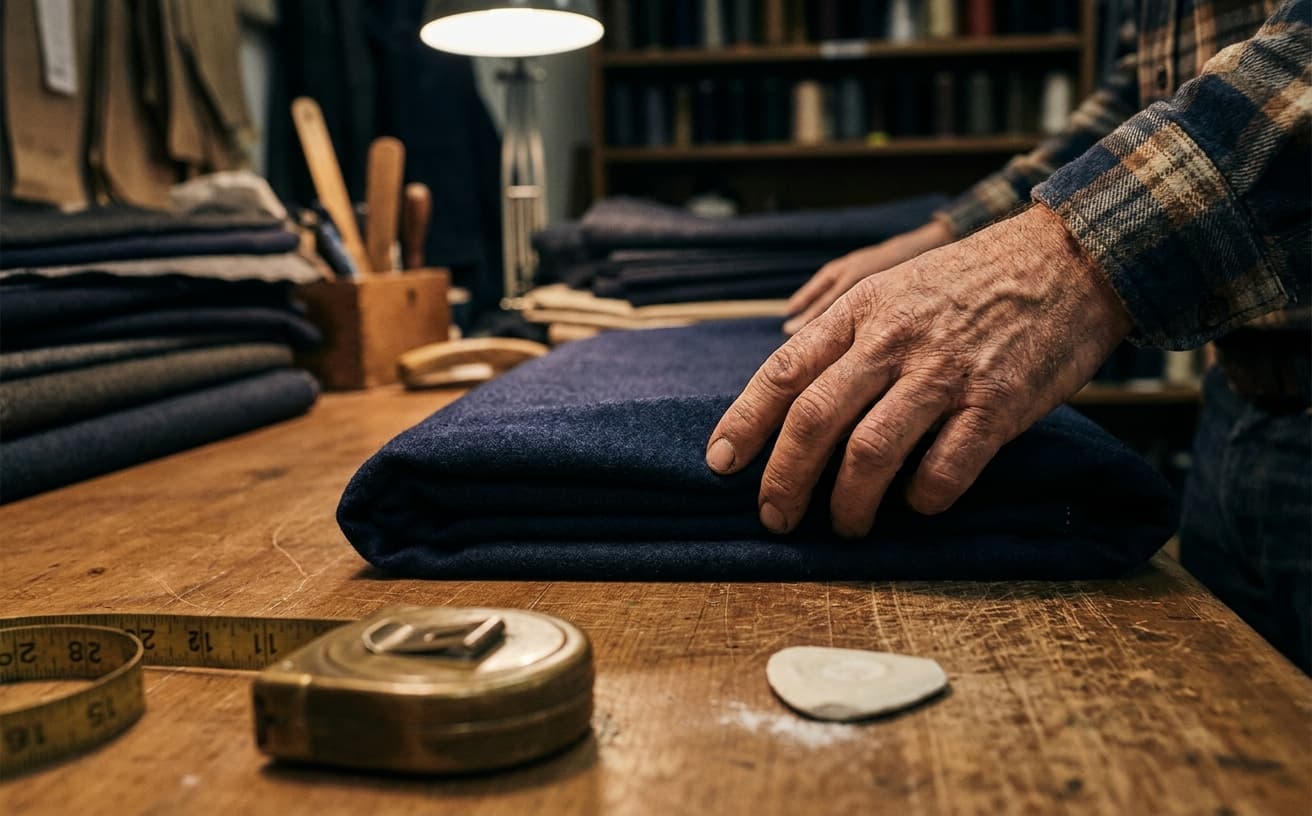
Every Common Hand garment is finished by Marcus Reyes and a small team in a one-room workshop on the third floor of a converted warehouse in Greenpoint. Marcus learned the trade from his uncle in Mayagüez, then spent eleven years on Savile Row before opening the bench he runs now.
He cuts every panel by hand because the wool, he says, tells him where the seam wants to go. The pace is the pace it has always been. Two coats in a good week, three when the light cooperates, never more.
No. 04
Letters from the bench.
Notes on cloth, makers, and what we are working on. One letter per season, written from the workshop, never sold to anyone.
We send four letters a year. You may step away whenever the season turns.